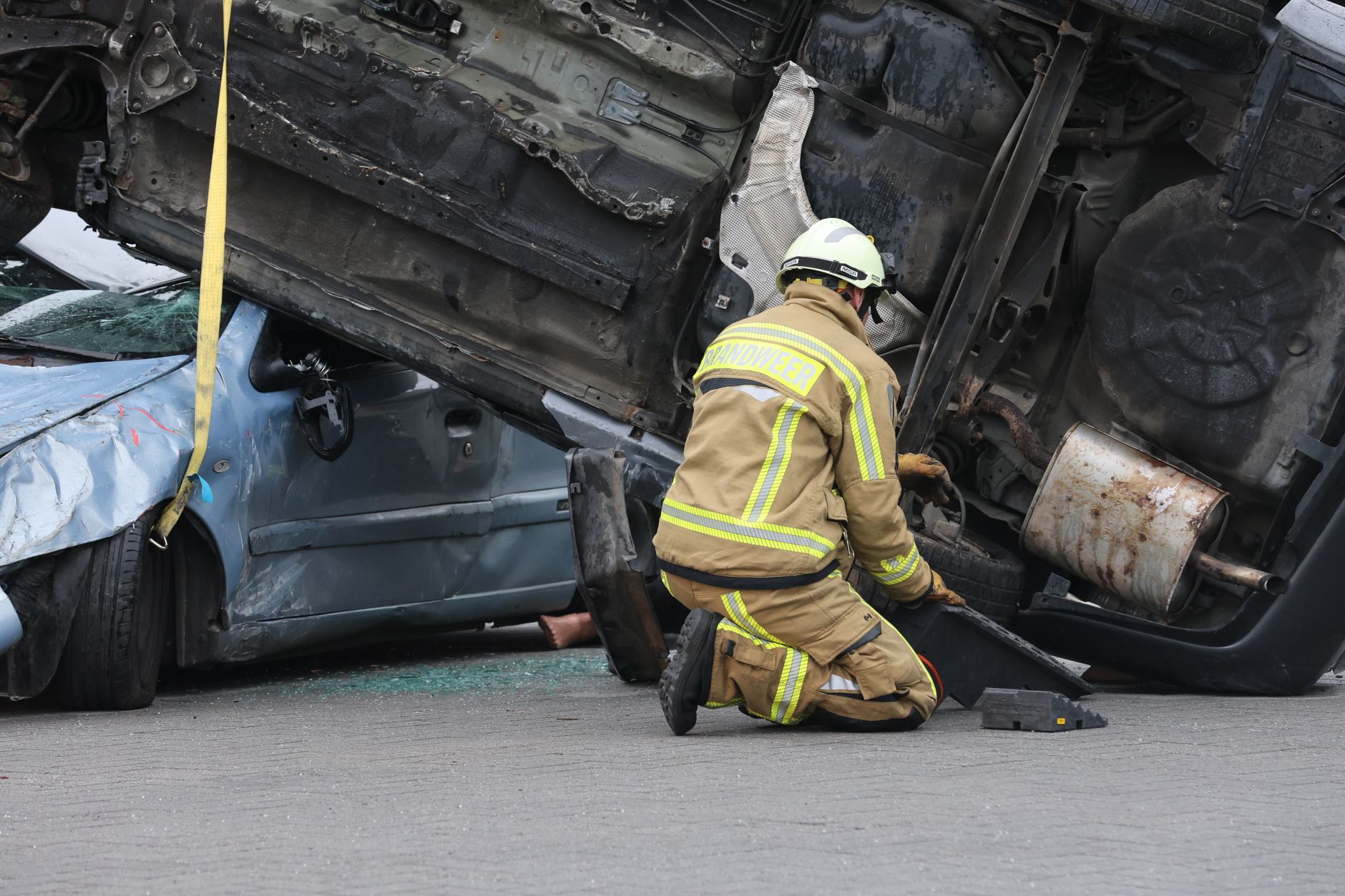
Flanagan Law Firm achieved a $99.9M verdict in a truck accident case, representing one of the largest settlements in personal injury litigation for commercial vehicle collisions. This outcome demonstrates how catastrophic injury cases involving commercial trucks can result in substantial jury awards when liability and damages are clearly established.
The verdict underscores the financial exposure trucking companies face when inadequate maintenance, driver negligence, or safety violations lead to severe harm. The case illustrates the complexity of truck accident litigation, where verdicts of this scale typically involve multiple factors: the severity of injuries, the defendant’s degree of negligence or recklessness, the victim’s economic losses, and documented pain and suffering. A $99.9M award doesn’t occur in routine fender-benders; it emerges from cases where catastrophic injuries—paralysis, permanent disfigurement, loss of limb, or wrongful death—combine with clear evidence of corporate negligence or willful misconduct.
Table of Contents
- Why Do Truck Accident Verdicts Reach Nine Figures?
- The Role of Evidence in Building Catastrophic Truck Accident Cases
- Liability Theories in High-Value Truck Accident Cases
- Damages Components in a $99.9M Verdict
- Challenges in Defending Against High-Value Verdicts
- The Role of Punitive Damages in Truck Accident Cases
- Insurance and Settlement Pressures in Cases of This Magnitude
- Frequently Asked Questions
Why Do Truck Accident Verdicts Reach Nine Figures?
Commercial truck accidents generate verdicts at the upper end of settlement ranges because trucks weigh 20-30 times more than passenger vehicles, multiplying the force of impact and likelihood of severe injury. When a 18-wheeler collides with a smaller vehicle, the occupants face catastrophic harm: traumatic brain injuries, spinal cord damage, crushing injuries, and fatalities occur far more frequently than in car-to-car accidents. A victim left permanently paralyzed or cognitively impaired will require lifetime medical care, assistive devices, home modifications, and personal attendant services—costs that routinely exceed $5M to $10M over a lifespan.
Jury awards of $99.9M or higher often reflect not just medical expenses but lost earning capacity, loss of enjoyment of life, and punitive damages designed to punish corporate negligence. When a trucking company knowingly operates unsafe vehicles, skips required maintenance, pressures drivers to violate hours-of-service regulations, or hires drivers with poor safety records, juries view this as recklessness warranting punishment, not mere negligence. Economic damages cover past and future medical care; non-economic damages address pain and suffering; punitive damages penalize the defendant and deter future wrongdoing.
The Role of Evidence in Building Catastrophic Truck Accident Cases
Verdicts of $99.9M require substantial evidence of the defendant’s wrongdoing and the plaintiff’s harm. Discovery in truck accident cases often reveals critical documents: maintenance records showing missed inspections, electronic logs revealing hours-of-service violations, text messages or emails documenting cost-cutting decisions that sacrificed safety, driver qualification files showing inadequate screening, or training records proving the company failed to teach proper procedures. Expert witnesses testify about the truck’s mechanical condition, the accident scene physics, medical prognosis, and lifetime care costs.
Medical records spanning years establish the plaintiff’s permanent disability and ongoing treatment needs. A limitation in very large verdicts is appellate scrutiny: awards of $99.9M face heightened review from appellate courts, which may reduce the amount if they determine it is excessive or disproportionate to the harm or defendant’s misconduct. Some verdicts have been reduced by 30-50% on appeal, though substantial awards typically survive if the trial evidence and jury instructions were proper. The $99.9M figure, approaching but not exceeding the $100M threshold, may reflect a jury’s awareness that appeals courts scrutinize round numbers above $100M more carefully.
Liability Theories in High-Value Truck Accident Cases
Flanagan’s verdict likely rested on one or more liability theories: negligence (the driver or company failed to use reasonable care), negligent entrustment (the company entrusted a vehicle to an unfit driver), negligent retention (the company retained an unsafe driver despite knowledge of prior violations), negligent hiring (the company failed to properly screen the driver), or gross negligence or willful misconduct (the company’s conduct was so reckless as to warrant punitive damages). Each theory strengthens the case and increases damages. Negligent entrustment is particularly powerful in truck cases: if a company assigns a truck to a driver known to have prior accidents, drug convictions, or violations, the company shares liability when that driver causes injury.
Negligent retention arises when a company learns of a driver’s safety problems after hiring but retains the driver anyway. In high-value verdicts, juries frequently find multiple liability theories proven, compounding the defendant’s responsibility and the award. Compare this to a single-vehicle accident where only the driver is sued: verdicts are typically lower because the jury cannot assign liability to a corporation with deep pockets and insurance.
Damages Components in a $99.9M Verdict
A $99.9M award is typically broken into components: past medical expenses (surgeries, hospital stays, rehabilitation, diagnostic imaging, ongoing therapy—often $500K to $2M), future medical expenses (lifetime care, medications, equipment, nursing or attendant services—often $3M to $8M or more), past lost wages (if the victim worked before injury), future lost earning capacity (what the victim would have earned had they remained healthy—often the largest component, particularly if the victim was young and high-earning), pain and suffering (compensation for physical pain, emotional distress, loss of enjoyment of life—often $2M to $10M+), and punitive damages (designed to punish the defendant and deter similar behavior—often $1M to $20M+ in cases of gross negligence). In a $99.9M verdict, past and future medical expenses might total $8M to $15M, lost earning capacity $30M to $50M (if the victim was young or highly paid), non-economic damages $20M to $40M, and punitive damages $15M to $35M.
The exact breakdown depends on the victim’s age, pre-injury income, profession, life expectancy, and the severity and permanence of injury. A 35-year-old surgeon left paralyzed generates higher lost-earning-capacity damages than a 65-year-old retail worker with the same injury.
Challenges in Defending Against High-Value Verdicts
Trucking companies and their insurers face significant challenges defending against catastrophic injury claims. Comparative negligence rules (where the plaintiff bears some responsibility for the accident) may reduce damages, but many truck accidents are 90-100% attributable to the truck driver or company: a truck driver falling asleep at the wheel, running a red light, or traveling too fast for conditions leaves little room for the plaintiff to share blame. Insurance coverage becomes critical: most trucking companies carry liability insurance of $750K to $1M per accident, far below a $99.9M verdict, so judgments typically exceed available insurance and attach to the company’s assets or require installment payments. A limitation for plaintiffs is that many trucking companies, particularly smaller operators, lack sufficient assets to pay a $99.9M judgment.
The company may declare bankruptcy, leaving the plaintiff to pursue collection against whatever remains. This is why identifying a solvent defendant or one with adequate insurance is crucial before filing suit. Larger trucking companies and national carriers are preferable defendants from a plaintiff’s perspective because they carry substantial insurance and have corporate assets. In some cases, the plaintiff must pursue claims against the shipper, loader, or broker involved in the transport, expanding potential sources of recovery.
The Role of Punitive Damages in Truck Accident Cases
Punitive damages in a $99.9M verdict often constitute $15M to $35M of the total. These are awarded not to compensate the victim (that’s the role of economic and non-economic damages) but to punish the defendant for gross negligence, recklessness, or willful misconduct and to deter similar conduct in the future. A trucking company that ignored maintenance warnings, falsified inspection records, ignored driver safety complaints, or pressured drivers to violate hours-of-service rules faces punitive damages exposure.
Juries sometimes award punitive damages at a multiple of compensatory damages (2 to 5 times, or occasionally higher) as a statement that the defendant’s behavior was egregious. Punitive damages are subject to constitutional limits: the U.S. Supreme Court and many state courts have imposed guidelines suggesting punitive damages should not exceed 9 times compensatory damages and typically should not exceed 3 to 5 times, though these are general guidance rather than absolute caps. A few states cap punitive damages at a fixed amount (like $1M or $2M) or disallow them in certain cases, limiting verdicts in those jurisdictions regardless of the defendant’s misconduct.
Insurance and Settlement Pressures in Cases of This Magnitude
A $99.9M verdict signals that pre-trial settlement offers fell short of the jury’s valuation. Trucking companies and their insurers often have settlement authority in the $10M to $50M range for cases involving permanent disability and clear liability, but verdicts significantly exceeding these ranges are not uncommon when juries perceive recklessness or when the victim is young with decades of lost income ahead. Settlement negotiations in high-value cases are often prolonged and complex, involving multiple insurance carriers (the truck company’s primary insurer, excess coverage, the driver’s individual coverage if any), attempts to recruit additional defendants (the shipper, the maintenance contractor, the leasing company), and structured settlement discussions.
Some large verdicts result in post-trial settlements or appeal-stage agreements below the verdict amount but above pre-trial offers, as both sides weigh the risks and costs of continued litigation. A defendant might settle for $60M on appeal rather than risk the $99.9M verdict being upheld, plus appellate costs. A plaintiff might accept $70M rather than endure a multi-year appeal battle with an uncertain outcome.
- —
Frequently Asked Questions
What makes truck accident verdicts reach $99.9M or higher?
Catastrophic injuries (paralysis, permanent brain damage, wrongful death), combined with the victim’s lost earning capacity, lifetime medical costs, pain and suffering, and punitive damages for corporate negligence or recklessness.
Can a trucking company appeal a $99.9M verdict and reduce it?
Yes, appellate courts review verdicts for excessiveness and sometimes reduce them by 20-50% if found disproportionate to the harm or applicable law, though substantial awards often survive appeal if the evidence was clear.
How much insurance coverage do most trucking companies carry?
Standard commercial truck insurance is typically $750K to $1M per accident, far below a $99.9M verdict, leaving judgments that exceed available coverage and attach to company assets.
What liability theories apply in truck accident cases?
Negligence, negligent entrustment (assigning a vehicle to an unfit driver), negligent retention (keeping an unsafe driver employed), negligent hiring, and gross negligence or willful misconduct (which supports punitive damages).
What percentage of a $99.9M verdict typically comes from punitive damages?
Punitive damages often comprise $15M to $35M of a nine-figure verdict, with courts generally limiting punitive damages to 3-9 times compensatory damages, though this varies by state.
How long does litigation typically last in a case resulting in a $99.9M verdict?
High-value truck accident cases often take 3-7 years from filing to verdict, including discovery, expert discovery, motion practice, trial, and potential appeals, with settlement negotiations occurring throughout.