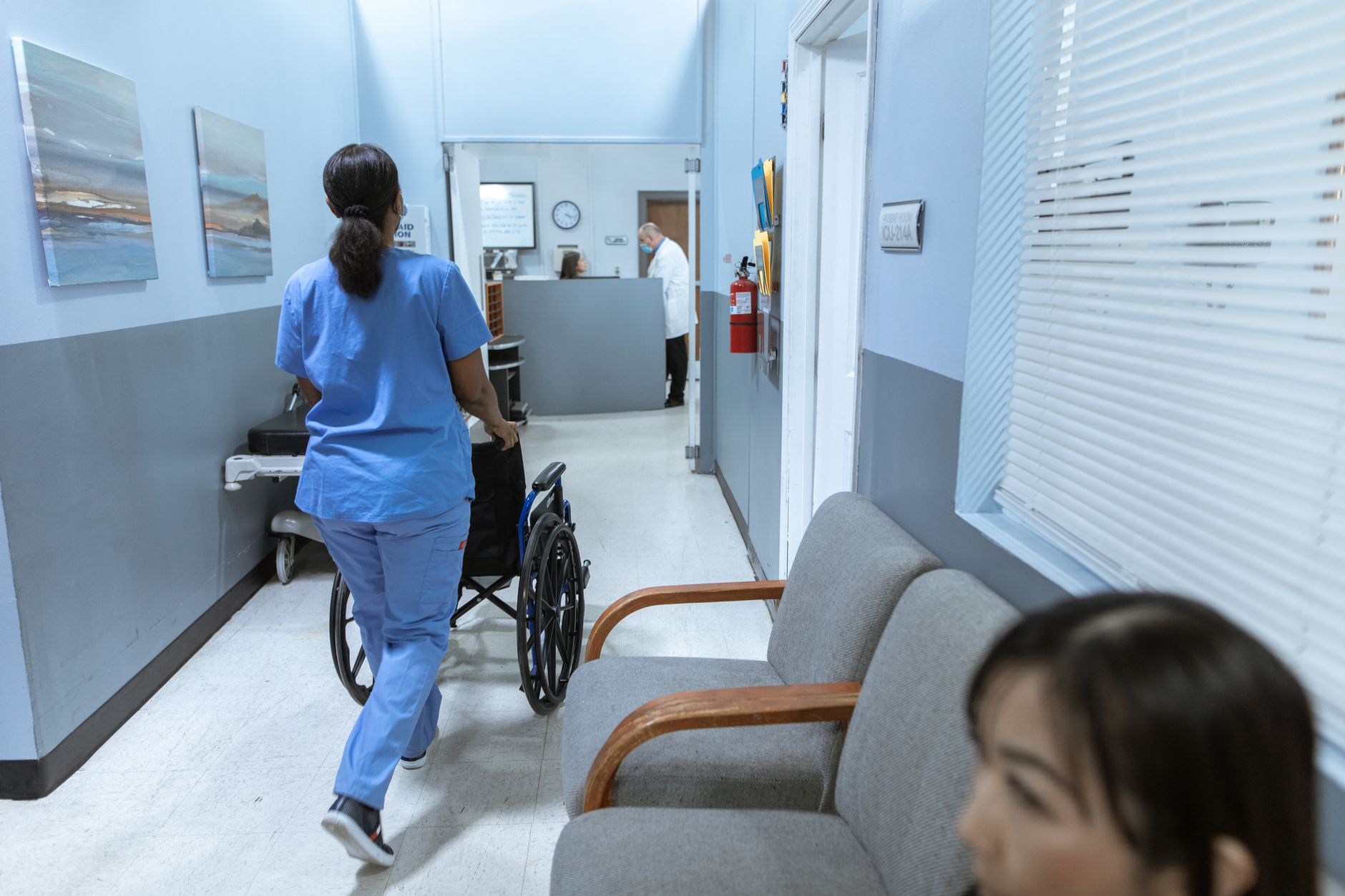
A wrongful death lawsuit has been filed against Heisinger Bluffs Senior Living Community in Jefferson City, alleging that medical negligence and inadequate care directly contributed to the death of Mary Carter. James Callison, Carter’s son, filed the lawsuit naming not only the facility itself but also Green Tree Healthcare Management MO and HB Operations Holdco as defendants, accusing them of failing to provide basic standards of care during his mother’s nine-month stay. The allegations paint a picture of systemic failures, from improper wound care to the failure to ensure patients could access food and water—oversights that can have fatal consequences in a healthcare setting where residents depend entirely on staff for their survival.
Carter was admitted to Heisinger Bluffs Senior Living Community on August 6, 2024, and died in May 2025. The timeline matters here because it shows that within months of admission, despite being documented as “at-risk” and “high-risk” on the Braden Scale—the standard healthcare assessment tool for predicting pressure injury risk—the facility failed to implement the level of care and monitoring her condition required. This is not an unusual case in the landscape of nursing home litigation; it represents a recurring pattern of negligence that affects vulnerable populations who cannot advocate for themselves.
Table of Contents
- What Wrongful Death Allegations Were Filed Against Heisinger Bluffs?
- Documented Care Failures and the Braden Scale Assessment
- The Pattern of Negligence in Nursing Facility Cases
- What Families Should Know About Nursing Home Neglect
- Common Warning Signs of Inadequate Care in Facilities
- How Staffing and Training Relate to Patient Safety
- Previous Legal Actions and Accountability
What Wrongful Death Allegations Were Filed Against Heisinger Bluffs?
The core allegations against Heisinger Bluffs Senior Living Community center on medical negligence, with specific failures documented throughout Carter’s stay. The lawsuit claims the facility provided improper wound care, failed to adequately train and monitor staff, and—critically—failed to ensure proper nutrition and hydration. These are not abstract charges; each one represents a concrete failure with measurable consequences. For example, documented evidence shows that meals and fluids were not placed within the patient’s reach, and staff members failed to ensure that Carter actually completed her meals.
In a nursing facility, such oversights cross from negligence into a violation of basic care standards, particularly for patients flagged as high-risk. Inadequate nutritional and hydration support is a leading cause of preventable complications in nursing homes, yet it remains one of the most commonly cited deficiencies in facility inspections. When a resident is documented as high-risk for pressure injuries—as Carter was on the Braden Scale—proper nutrition becomes even more critical because it directly affects the body’s ability to heal. The defendants’ failure to ensure this basic care requirement demonstrates a disconnect between documented risk assessments and actual care delivery, a pattern that suggests systemic rather than isolated failures.
Documented Care Failures and the Braden Scale Assessment
The Braden Scale is a critical tool in nursing care, used to predict which patients are at risk for pressure injuries and to determine what interventions are necessary. Mary Carter was assessed as both “at-risk” and “high-risk” on this scale—a clear clinical signal that demanded heightened attention to nutrition, hydration, skin care, and repositioning. Yet despite this documented assessment, the facility failed to implement care protocols consistent with that risk level. This failure represents a particularly egregious form of negligence: the facility had the knowledge, had the assessment in writing, and failed to act on it.
Wound care deficiencies compound the problem. Proper wound management in a high-risk patient requires regular assessment, appropriate dressing changes, and attention to factors that promote healing—including the nutritional support that was simultaneously being neglected. The combination of inadequate wound care and failure to ensure proper nutrition and hydration created a cascade of preventable complications. In clinical terms, this is not a situation where one small mistake led to an unfortunate outcome; it is a series of interconnected failures, each one compounding the others. The limitation of the legal process is that it often requires proving causation between each specific failure and the ultimate death, but in cases of cumulative neglect, the causal chain is often clear to medical professionals.
The Pattern of Negligence in Nursing Facility Cases
This lawsuit is not the first action against Heisinger Bluffs Senior Living Community. In December 2023, another wrongful death lawsuit was filed—Tracy v. Heisinger Bluffs—which resulted in a settlement on May 13, 2025, just days before or after Carter’s death in May 2025. The settlement was dismissed on May 29, 2025.
The existence of a prior settlement at the same facility is significant because it raises questions about whether corrective measures were implemented and whether patterns of inadequate care persisted. When multiple wrongful death lawsuits target the same facility within a short timeframe, it often signals that the problems identified in the first case were never adequately remedied. Facilities that settle one case but continue the same problematic practices face compounding liability exposure. For families considering placing loved ones in a nursing home, the existence of prior litigation against a facility is a crucial warning sign—not proof of ongoing problems, but evidence that the facility has faced serious allegations and compensated families for harm. The comparison between facilities is stark: some nursing homes operate for decades without a single wrongful death settlement, while others accumulate multiple cases, suggesting fundamental operational or cultural issues.
What Families Should Know About Nursing Home Neglect
Recognizing the warning signs of inadequate care is essential for families who visit loved ones in nursing facilities. The failures alleged in Carter’s case—meals and fluids out of reach, lack of staff monitoring to ensure patients actually eat and drink, inadequate wound care—are not subtle. A family member visiting regularly would likely notice if their loved one consistently failed to finish meals or if wounds appeared poorly managed.
The practical challenge is that many families live at a distance from facilities, or work schedules make frequent visits difficult, which is precisely why standards of care exist and why negligence in this context is so damaging. For families who can visit regularly, asking direct questions is critical: Can your relative independently access meals and fluids, or does staff need to assist? Are meals within reach? Is there documentation of wound assessments and care? For families who cannot visit as frequently, requesting care summaries and asking the facility to document specific interventions—wound care, nutritional intake, mobility assistance—creates an accountability trail. The tradeoff is that such scrutiny requires time and persistence from family members who are often emotionally stressed and unfamiliar with healthcare terminology, yet it remains one of the most effective ways to catch problems before they become fatal.
Common Warning Signs of Inadequate Care in Facilities
Beyond the specific failures in Carter’s case, certain patterns of negligence recur across many nursing home lawsuits. Inadequate staffing is often at the root: if a facility is understaffed, even well-intentioned staff members cannot provide the attention high-risk patients require. When a patient is on a high-risk category like the “at-risk” and “high-risk” designations Carter received, the facility should have protocols in place for increased observation, assistance with meals and hydration, and regular wound assessments. A warning sign is when families hear vague explanations for poor outcomes or when staff seems unable to provide specific details about daily care activities.
Another common issue is the gap between assessment and implementation. Facilities conduct risk assessments—like the Braden Scale evaluation Carter received—but then fail to translate those assessments into actual care changes. This might happen because staff are not adequately trained on what the assessment results mean, or because the facility lacks the resources or commitment to provide the indicated level of care. A limitation of the regulatory system is that inspectors cannot be present 24/7, so much depends on facilities’ internal accountability and honest documentation of care delivered.
How Staffing and Training Relate to Patient Safety
The lawsuit specifically alleges inadequate staff training and monitoring, which are foundational issues in nursing home negligence cases. Even if a facility has written protocols for high-risk patients, those protocols are worthless if staff members have not been trained to recognize what “at-risk” means or what specific interventions are required. Training deficiencies often reveal themselves in the details: staff who do not know how to properly assess a wound, who do not understand the relationship between nutrition and wound healing, or who have not been trained on how to assist patients with meals in a way that ensures actual consumption.
Monitoring failures compound inadequate training. If a staff member is instructed to ensure a patient drinks fluids but is never supervised or evaluated on whether that task is actually completed, the instruction becomes meaningless. The example of meals and fluids not placed within reach, combined with staff not ensuring completion, suggests that the facility either failed to train staff on this requirement or failed to monitor whether trained staff were actually following protocol.
Previous Legal Actions and Accountability
The prior settlement in Tracy v. Heisinger Bluffs offers a concrete reference point for understanding accountability in nursing home cases. When a facility settles a wrongful death case, it typically does so to avoid the uncertainty, publicity, and expense of trial—not necessarily as an admission that failures occurred, though settlement often signals that the facility’s legal team determined the risk of losing at trial was too high.
The timing of the Tracy settlement (May 2025) and Carter’s death (May 2025) raises questions about whether both cases involved similar failures and whether the first settlement prompted any operational changes that might have protected subsequent residents. For families considering legal action after a loved one’s death in a nursing facility, the existence of prior settlements at the same facility strengthens their case. It demonstrates a pattern rather than an isolated incident and may make a jury more receptive to arguments about systemic negligence. The lawsuit filed by James Callison on behalf of his mother, Mary Carter, represents one family’s effort to hold Heisinger Bluffs Senior Living Community, Green Tree Healthcare Management MO, and HB Operations Holdco accountable for failures that contributed to her death during her nine-month stay from August 2024 through May 2025.