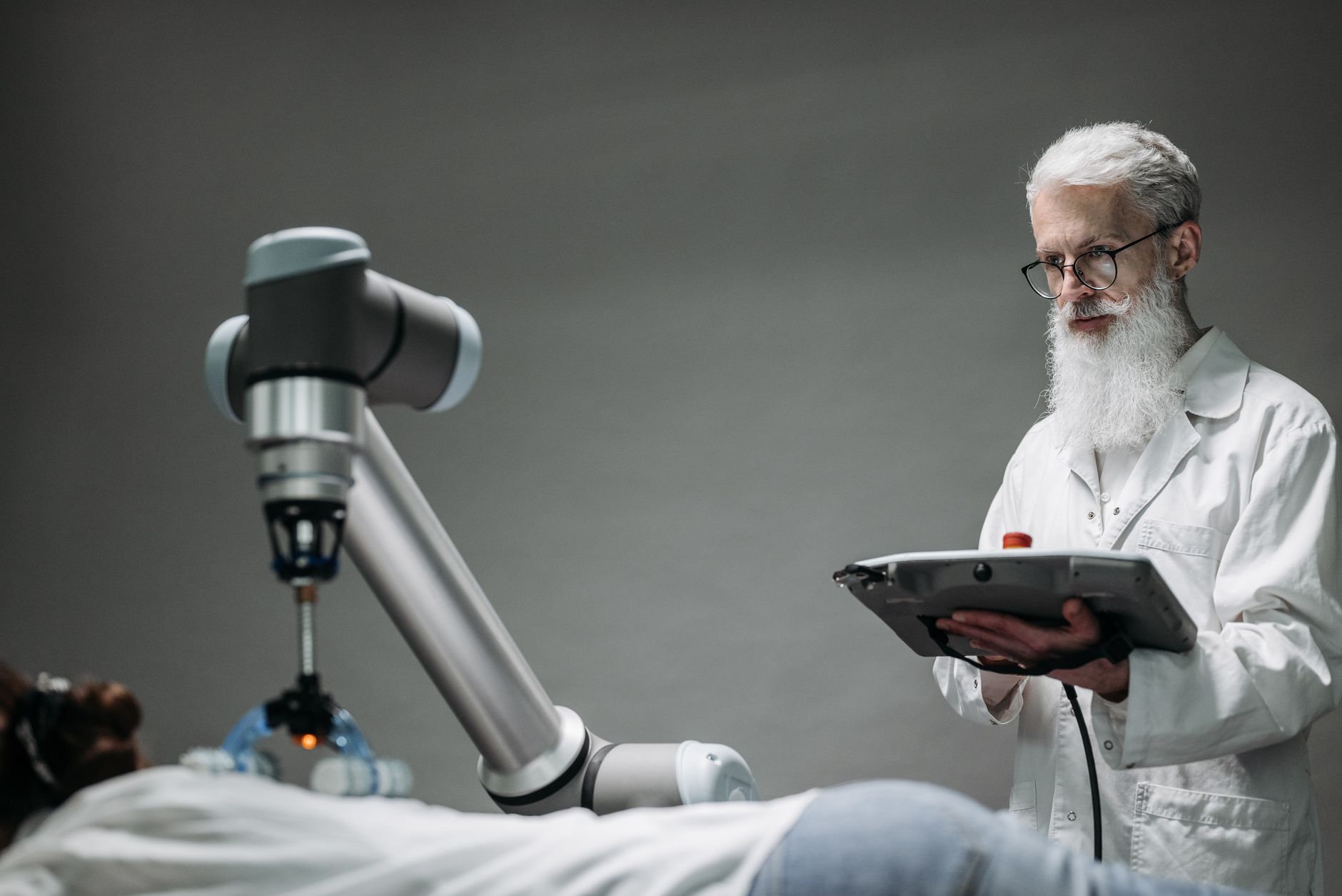
Punitive damages — extra money meant to punish a wrongdoer, not just pay medical bills — are available after a surgical-robot malfunction only with clear and convincing proof of oppression, fraud, or malice. A device error plus a serious injury, without that added proof, supports only compensatory damages if anything. A surgical robot here is a surgeon-guided machine with arms, cameras, and controls. A malfunction means the system or an instrument behaved unexpectedly during surgery, such as losing power, sticking, arcing, or moving off command.
Table of Contents
- What behavior can trigger punitive damages?
- Why is an ordinary malfunction not enough?
- What proof should patients preserve quickly?
- What do past da Vinci cases show?
What behavior can trigger punitive damages?
The California Legislature allows punitive damages only on clear and convincing evidence of oppression, fraud, or malice, not for ordinary negligence or contract breach, as stated in California Civil Code Section 3294. Oppression means cruel and unjust hardship with conscious disregard for rights. Fraud means intentional deceit to cause injury.
Cornell Law School's Legal Information Institute explains that punitive damages apply in tort cases for intentional torts or wanton and willful misconduct, as described in its punitive damages overview. That includes acting after learning injury was likely. Examples are using a tool after a safety warning, hiding a known defect, or altering records.
Why is an ordinary malfunction not enough?
A malfunction can show negligence, such as poor maintenance, poor training, or a surgical mistake. Negligence asks whether care fell below the accepted standard. It does not ask whether someone meant to harm or knowingly ignored danger.
Punitive damages need that second step. A broken wrist, burned tissue, or longer surgery does not by itself prove intent or conscious disregard. Contract claims against a hospital or clinic also do not open the door.
What proof should patients preserve quickly?
Device cases turn on records made near the time of surgery. Ask for copies before memories fade and logs rotate.
Do not treat a database count as proof of defect or rate. The FDA warns that MAUDE data are not intended to evaluate adverse-event rates or compare occurrence rates across devices, in its warning on MAUDE limits. Use reports as leads for investigation, not as verdicts.
- operative report, anesthesia record, and nursing notes
- device make, model, serial number, and instrument lot
- robot system logs, error codes, and video if saved
- recall letters, consent forms, and discharge instructions
What do past da Vinci cases show?
Drugwatch reports that Intuitive Surgical set aside about $67 million in 2014 to settle roughly 3,000 product-liability claims tied to recalled Monopolar Curved Scissors and withdrawn tip covers, according to its account of da Vinci settlements. A group settlement can resolve many injury claims at once.
Settlement does not equal a punitive-damages finding. It does not prove oppression, fraud, or malice in any later case. Bring the operative report, device identifiers, implant card, photos, bills, and a dated symptom diary to an early case review.
You Might Also Like
- A Surgical Robot Malfunction During a Procedure: Which Economic and Non-Economic Damages Could Be Available?
- A Spinal Cord Stimulator Causing Unexpected Nerve Injury: When Might Punitive Damages Be Available?
- A Surgical Robot Malfunction During a Procedure: What Evidence Could Prove—or Defeat—Liability?