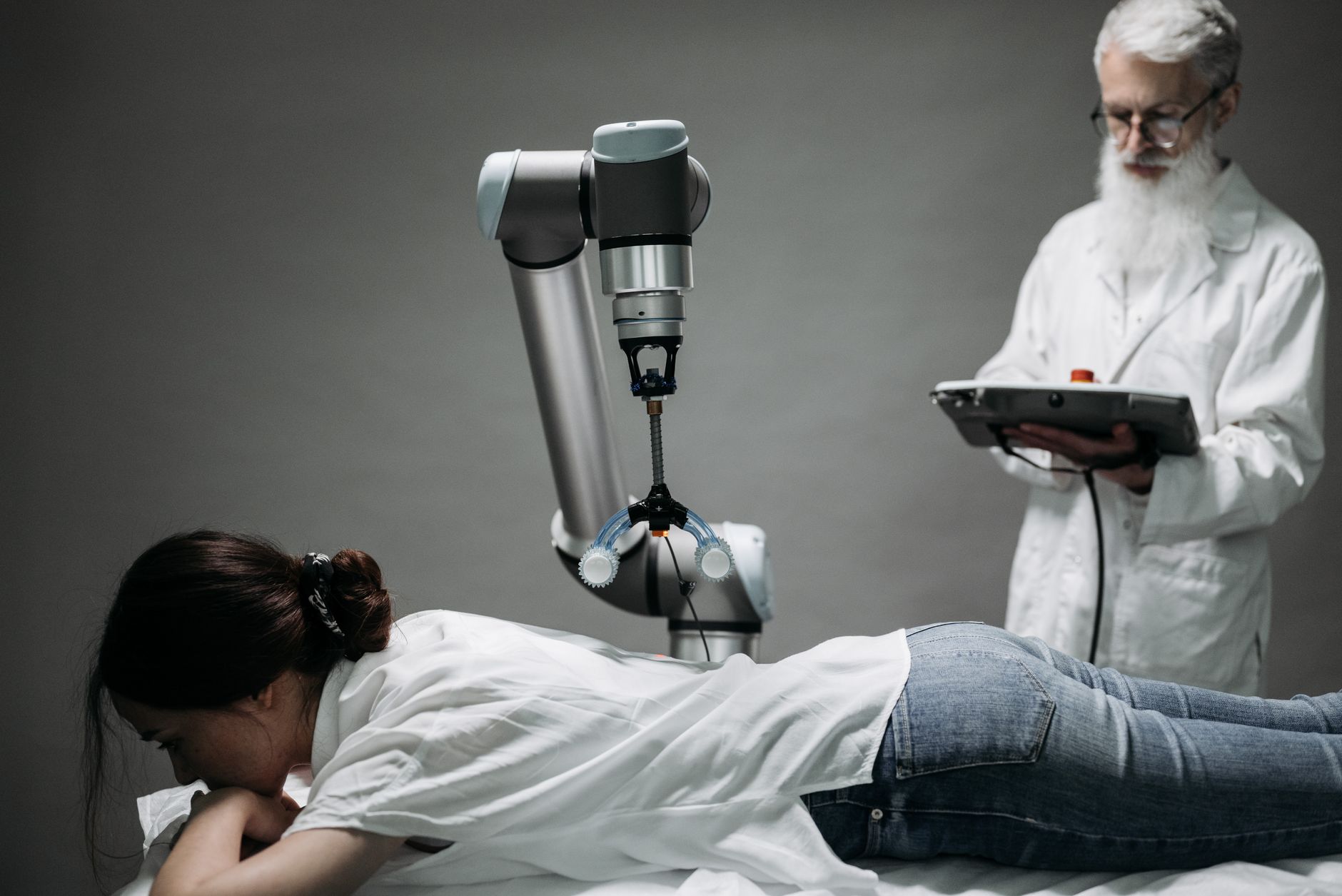
A surgical robot is a surgeon-controlled system with robotic arms and instruments, not an autonomous machine. Liability after a malfunction turns on proof that a specific device failure caused the injury, and a poor outcome alone does not prove fault. That proof usually points to one of three targets: surgeon error, hospital training or maintenance failure, or a product defect. Each target needs different records and expert analysis.
Table of Contents
- What kinds of failures actually harm patients?
- Which records can prove or defeat a malfunction claim?
- Why do injury reports alone rarely win?
- Who can be liable — surgeon, hospital or maker?
- What should families preserve and request?
What kinds of failures actually harm patients?
A 14-year review published through MIT DSpace found 144 deaths, 1,391 patient injuries and 8,061 device malfunctions in robotic surgery MIT-published analysis of FDA reports. Broken or burnt instrument fragments falling inside patients appeared in 14.7% of malfunction reports, while electrical arcing appeared in 10.5%. The same MIT DSpace review found 1,104 procedures, or 10.4% of events, were interrupted to restart the system, convert to a non-robotic method or reschedule. Delay and conversion can cause separate harm through longer anesthesia, blood loss or a larger incision.
Lawyers compare the planned robotic approach with what actually happened. Specific instruments matter more than general failure counts. Intuitive disclosed in its SEC Form 10-Q for Sept. 30, 2014 a $67.4 million pre-tax charge to settle claims tied to Monopolar Curved Scissors versions recalled in 2013 and a first-generation tip cover withdrawn in 2012. A recall notice, lot number and operative note using that tool can connect injury to a known danger.
Which records can prove or defeat a malfunction claim?
LawyersTrend industry coverage in 2026 describes a data trail that often decides these cases. It includes console event logs with dates, run times and instrument deployments, instrument-use records, operating-room video, operative reports, maintenance logs and surgeon training records. Each record answers a different question. Console logs and video can confirm an error code, stuck arm or arcing event.
Maintenance and use-count records can show a worn instrument stayed in service too long. Training and proctoring files can show whether the surgeon had completed validated preparation for that procedure. Absence of a record can also defeat liability. If logs show normal function, video shows surgeon technique as the cause, or maintenance was current, a defect claim weakens. Preservation letters should therefore request the complete electronic log, not only the dictated operative note.
Why do injury reports alone rarely win?
The U.S. FDA warns that its MAUDE reports cannot alone establish incidence, prevalence or cause because of under-reporting, inaccuracies, unverified causation and missing device-use totals FDA explanation of the MAUDE database. A count of similar reports suggests a question for discovery, not proof of defect or negligence. Defense counsel will stress that limit. Courts also require expert testimony linking the event to the injury.
In Mracek v. Bryn Mawr Hospital, the Third Circuit affirmed summary judgment for Intuitive Surgical when the patient offered no expert evidence excluding other causes of error messages or linking the event to his injury Third Circuit opinion in Mracek. An error on a screen, without medical causation testimony, was not enough. A winning file therefore pairs the report with case-specific proof. Useful links include time-stamped alarms, tissue damage matching arcing or fragment loss, conversion notes, and a differential diagnosis ruling out surgical technique.
Who can be liable — surgeon, hospital or maker?
A surgeon can face malpractice liability for poor patient selection, inadequate disclosure, technique errors or continued robotic attempts after a clear failure. The hospital can face liability for credentialing, staffing, equipment upkeep and emergency backup. The manufacturer can face product-liability claims for design, manufacturing or warning defects. Warning claims have a special path for hospitals as buyers. In Taylor v. Intuitive Surgical, the Washington Supreme Court held the maker owed a separate strict-liability duty to warn the purchasing hospital about da Vinci dangers Washington Supreme Court opinion in Taylor.
The learned-intermediary doctrine did not excuse failure to warn the hospital itself. FDA expectations shape the standard of care without creating a lawsuit by themselves. An Arnold and Porter summary of FDA draft guidance from Sept. 2026 says premarket proof should address software validation, cybersecurity, reliability, human-factors testing, foreseeable failures, emergency procedures and validated training. The guidance is nonbinding, with comments due Nov. 24, 2026, but plaintiffs may cite gaps in testing, warnings or training as negligence evidence.
What should families preserve and request?
Fast action protects both medical care and later compensation claims. Hospitals overwrite video and rotate logs, and instruments may be discarded or returned.
Bring that packet to a personal-injury consultation focused on surgical-device cases. Ask how the firm will fund records retrieval, device inspection and expert causation review.
- Ask for the operative report, anesthesia record and conversion note.
- Request console event logs, instrument-use counts, video, maintenance logs and training files.
- Keep the implant list, device labels, recall letters and discharge instructions.
- Write a dated timeline of symptoms, follow-up care, costs and missed work.
- Seek an independent medical review before accepting that a burn or delay was normal.
You Might Also Like
- A Spinal Cord Stimulator Causing Unexpected Nerve Injury: What Evidence Could Prove—or Defeat—Liability?
- Boston Scientific Spinal Cord Stimulator Products-Liability Proceedings: Evidence and Expert Questions That Could Shape the Outcome
- Boston Scientific Spinal Cord Stimulator Products-Liability Proceedings: How an Appeal or Review Could Change the Result