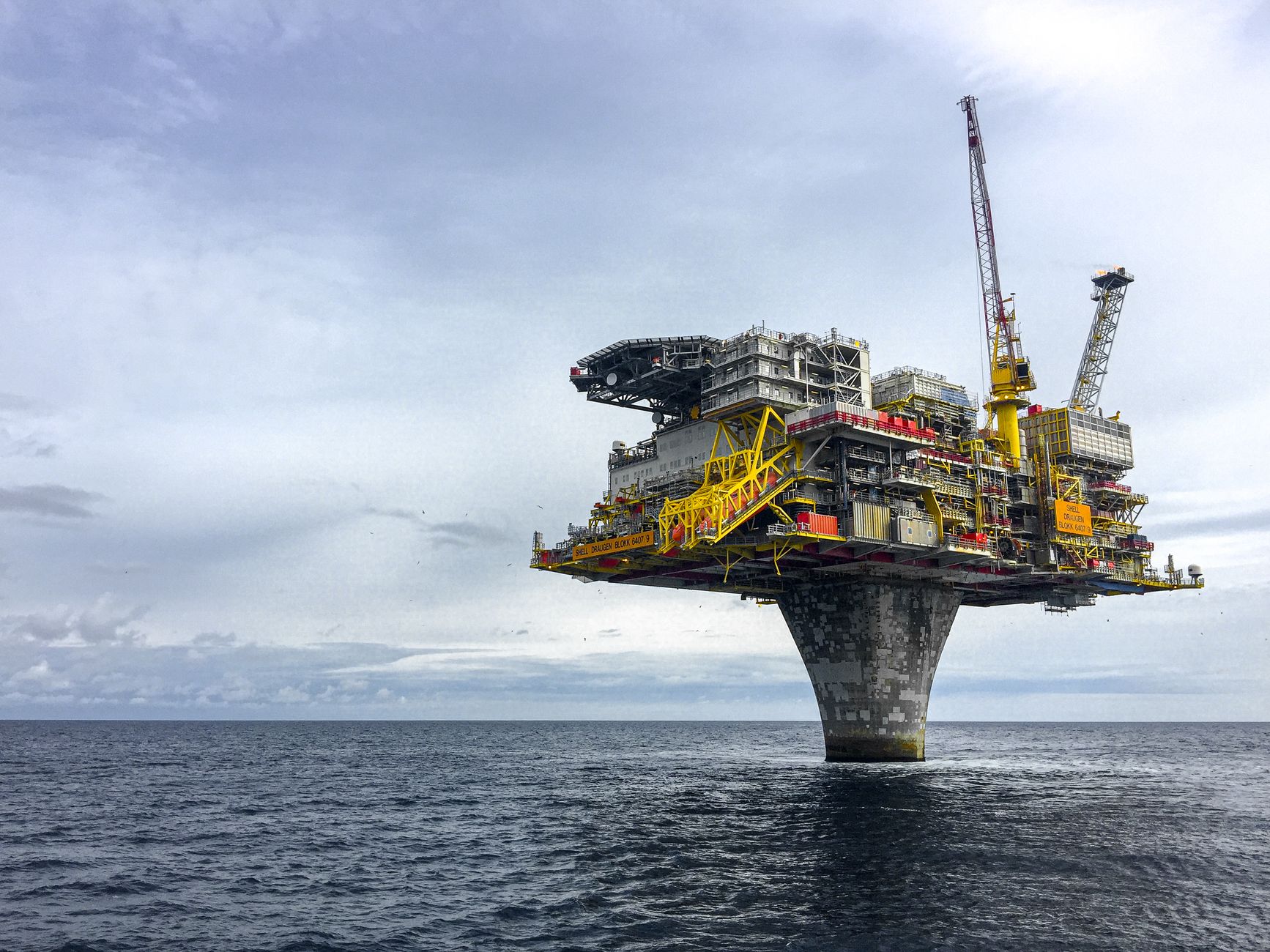
Expert testimony decided the two questions that mattered most in the Deepwater Horizon civil litigation: whether BP's conduct crossed from ordinary negligence into gross negligence, and how much oil actually escaped. Drilling engineers' opinions about the rig crew's decisions supported Judge Carl Barbier's reckless-conduct finding against BP, and petroleum engineers' flow-rate models set the per-barrel ceiling on Clean Water Act penalties. The case was tried without a jury in New Orleans federal court, in phases. That structure put a single judge in the position of weighing competing technical experts directly, which is why the expert record — not witness sympathy — drove both the liability allocation and the damages arithmetic.
Table of Contents
- What the Phase One ruling actually held
- Why the legal standard made engineering opinion decisive
- The negative pressure test, and the fight over one expert
- How expert flow-rate models built the damages ceiling
- The ceiling was never collected — and what that means for your case
- Frequently Asked Questions
What the Phase One ruling actually held
On September 4, 2014, Judge Barbier issued 153 pages of Findings of Fact and Conclusions of Law after the non-jury Phase One trial. According to Montgomery McCracken's analysis of the ruling, he found BP Exploration & Production's conduct reckless, grossly negligent and willful misconduct, and a proximate cause of the blowout. Transocean, the rig owner, and Halliburton, the cement contractor, were found negligent only. The same ruling apportioned comparative fault under general maritime law: BP 67%, Transocean 30%, Halliburton 3%.
That split is not a symbolic scorecard. It governs contribution between the defendants and their exposure to punitive damages, which means it determines who ultimately pays what when one defendant satisfies a judgment. The practical lesson for anyone reading a multi-defendant disaster case: a gross-negligence finding against one party and simple negligence against the others is the single most consequential line in the opinion. It separates the defendant facing punitive and enhanced statutory exposure from those facing only compensatory liability.
Why the legal standard made engineering opinion decisive
Barbier held that gross negligence under the Clean Water Act requires only objective proof of conduct exceeding ordinary negligence — not the subjective "culpable mental state" BP argued for. A JD Supra legal update on the ruling describes that standard choice as central to the outcome. That ruling converted the case from a search for intent into a technical audit of decisions.
If the court does not need evidence that anyone meant to take a reckless risk, then the question becomes whether the choices themselves fell objectively below the line — and that is exactly what drilling engineers are qualified to say. The effect is generalizable. Where a statute uses an objective recklessness standard, expert opinion about industry practice and specific operational choices can carry a punitive-level finding on its own. Where the standard is subjective, the same testimony becomes background and the plaintiff must reach for documents, emails, and testimony about state of mind.
The negative pressure test, and the fight over one expert
The discrete act Barbier treated as gross negligence was the misreading of a safety test. Richard Heenan, a government drilling expert, testified in March 2013 that the rig crew misinterpreted the April 20, 2010 negative pressure test, which in fact showed the well was not stable — as reported by The Maritime Executive's coverage of his testimony. A negative pressure test reduces pressure inside the well to confirm the cement seal is holding; a failed test means hydrocarbons can flow up. BP's post-trial strategy attacked a different expert.
Gene Beck, Halliburton's drilling expert, had advanced a casing-breach and compressive-forces theory at trial, and Barbier had sustained three BP objections because those conclusions were missing from Beck's written expert report. The opinion nonetheless cited Beck's trial testimony, and BP made that the centerpiece of its motion to amend and its appeal, as the Houston Chronicle's FuelFix reported in October 2014. Barbier denied the motion on November 13, 2014. His order denying amendment of the findings reasoned that Beck's trial theory was consistent with testimony from other experts called by the United States — an express ruling that no single expert carried the gross-negligence finding. That is the defensive architecture a plaintiff wants: overlapping, corroborating experts, so excluding any one of them does not collapse the case.
How expert flow-rate models built the damages ceiling
Phase Two was the quantification segment — 12 trial days from September 30 to October 18, 2013 — and it was a contest between material-balance models. BP's expert Dr. Martin Blunt put cumulative release at 3.26 million stock tank barrels using material-balance analysis, which infers how much fluid left a reservoir from pressure and volume behavior rather than measuring flow directly. The court's Phase Two ruling of January 15, 2015 found roughly 4 million barrels left the reservoir, with 3.19 million barrels discharged into the Gulf.
That 3.19 million figure was the damages ceiling, because the Clean Water Act prices penalties per barrel. At the $4,300-per-barrel gross-negligence maximum, it exposed BP to about $13.7 billion — the amount the United States sought, against BP's argument for roughly $3.19 billion, according to the Minnesota Journal of Law, Science & Technology. The penalty trial closed on February 2, 2015. Note the sequence: each phase's experts fed the next phase's math, so a defendant that lost the standard-of-care fight was already facing the highest multiplier before the volume question was even argued.
- Liability experts answered *how bad was the conduct* — which set the per-barrel rate.
- Quantification experts answered *how much spilled* — which set the multiplier.
- Penalty-phase experts answered *what can the defendant absorb* — financial expert Ian Ratner testified BP could afford the maximum penalty.
The ceiling was never collected — and what that means for your case
No judicial penalty figure was ever fixed by expert proof. A consent decree lodged on October 5, 2015 resolved the case at $20.8 billion total, including a negotiated $5.5 billion Clean Water Act penalty plus $8.1 billion in natural resource damages, per the U.S. Department of Justice announcement. The $5.5 billion penalty sits well below the roughly $13.7 billion the expert-derived volume made theoretically available.
That gap is the most transferable fact in the whole litigation. An expert-established maximum is leverage, not a forecast. It raises the number a defendant must weigh against trial risk, and it is usually cashed as a negotiated figure rather than a judgment. Three things a reader can take into their own claim:.
- Treat an opponent's expert report as a boundary document. The three sustained BP objections to Beck show that opinions absent from a report can be challenged at trial — but only if someone has read the report closely enough to notice.
- Build redundancy. Barbier's November 2014 order survived because multiple government experts said compatible things.
- Expect the statutory maximum to be discounted. A $13.7 billion ceiling produced a $5.5 billion penalty, and the headline total only reached $20.8 billion because natural resource damages and state claims were folded into the same decree.
Frequently Asked Questions
Was BP found liable for more than its 67% fault share?
The 67% allocation governs comparative fault under general maritime law, which controls contribution between BP, Transocean and Halliburton and their punitive-damages exposure. The Clean Water Act penalty analysis was separate and ran off the gross-negligence finding and the barrel count.
Why did the oil volume matter so much?
Clean Water Act penalties are assessed per barrel discharged. The court's finding of 3.19 million barrels, multiplied by the $4,300 gross-negligence maximum, is what produced the roughly $13.7 billion figure the government pursued.
Does a settlement mean the expert testimony was wasted?
No. The negotiated $5.5 billion penalty was bargained against the expert-derived exposure. Without the Phase One gross-negligence finding and the Phase Two volume ruling, the government would have been negotiating against a far lower maximum.