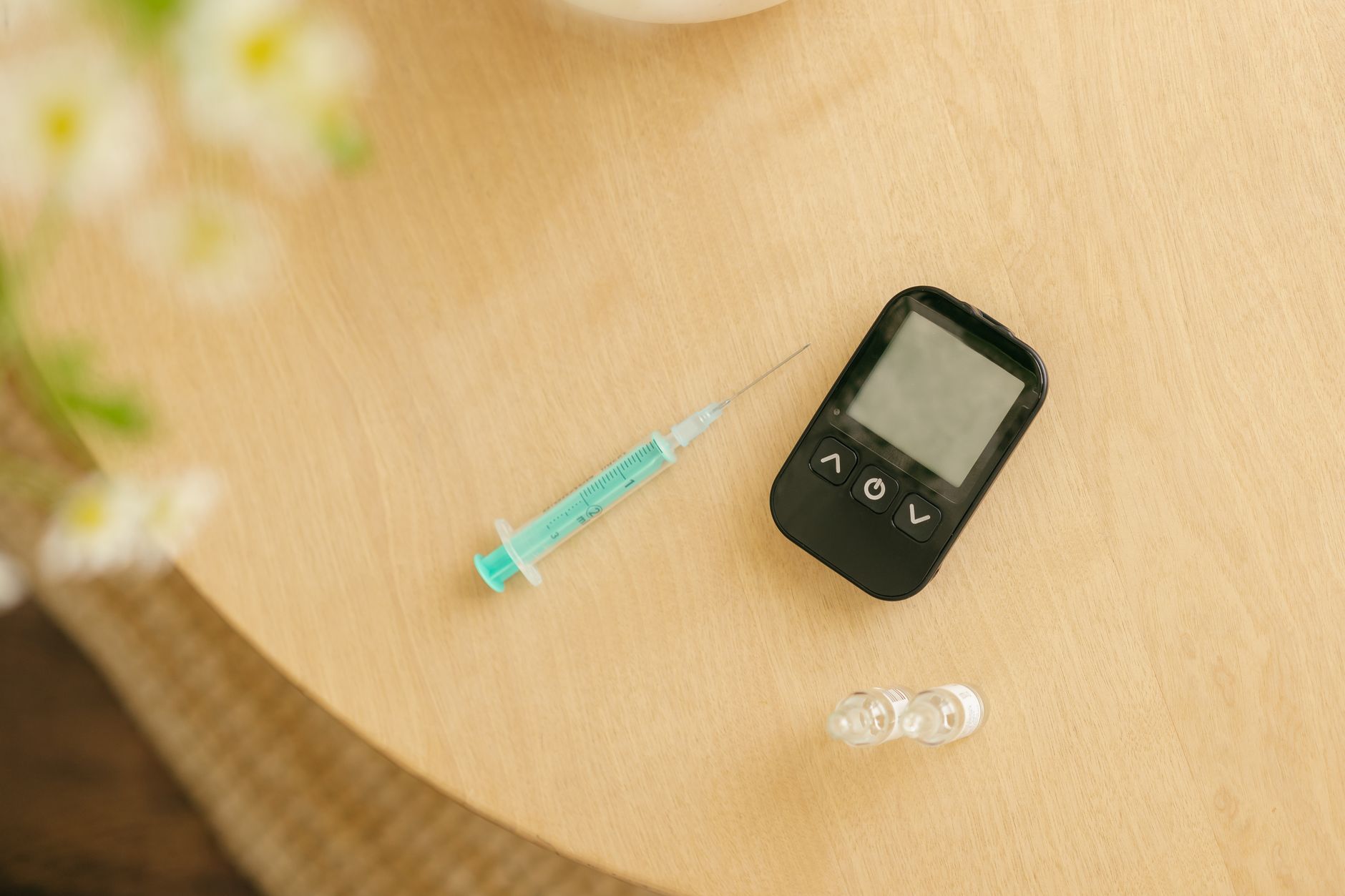
If an insulin pump delivered the wrong dose and caused injury, the case rarely turns on whether the device failed — it turns on federal preemption, expert causation proof, and consolidation fights that happen long before any settlement number is discussed. Most pumps are Class III devices with FDA premarket approval, and the Supreme Court's 2008 decision in *Riegel v. Medtronic* bars state-law claims that challenge the safety or effectiveness of such a device, leaving plaintiffs a narrow path.
That narrow path is the whole case. A viable insulin-pump claim usually alleges the manufacturer broke a specific FDA requirement — a manufacturing standard, for instance — rather than arguing the approved design should have been safer. Everything that follows, from settlement leverage to what gets appealed, flows from that constraint.
Official resources:
- Read the original report from FDA — Use this primary source to review the complete report.
- Explore the official data from SEC — Use this primary source to review the underlying data.
Table of Contents
- Why preemption decides these cases first
- The retainer-ring claims and where they are being litigated
- Expert causation is the second chokepoint
- What actually gets appealed
- Software and silent-failure recalls change the evidence problem
- Frequently Asked Questions
Why preemption decides these cases first
The Medical Device Amendments contain a preemption clause that blocks state requirements differing from or adding to federal ones. In Riegel v. Medtronic, the Supreme Court applied it to a Class III device with premarket approval — the FDA's most rigorous review — and held the plaintiff's state common-law design, manufacturing, and warning claims were preempted. Insulin pumps sit in that category, so the defense raises *Riegel* at the pleading stage in nearly every dosing suit. What survives is the "parallel" claim: an allegation that tracks a federal requirement instead of adding to it.
A Congressional Research Service analysis of the decision notes that lower courts have split on which theories actually qualify, with manufacturing-defect claims the most contested. Two plaintiffs with identical injuries can therefore get opposite rulings depending on the court. This is not a theoretical hurdle. In *Rieger v. Medtronic MiniMed*, the Los Angeles Superior Court granted summary judgment in February 2025, finding the pump had premarket approval and the California claims preempted under *Riegel* — a result the manufacturer's defense counsel announced publicly. A case can clear every factual question about the device and still end there.
The retainer-ring claims and where they are being litigated
The largest active insulin-pump dosing litigation concerns Medtronic's MiniMed Series 600 pumps. Medtronic's own FY2026 annual report filed with the SEC states that plaintiffs began suing its Diabetes unit in fiscal 2021 over allegedly defective clear retainer rings, that most filed suits are coordinated in California state court, and that plaintiffs' firms have signaled several thousand additional claimants. The alleged mechanism is mechanical and specific. The retainer ring is the component that holds the insulin cartridge in place; if it cracks, the cartridge can seat improperly, and the pump may over-deliver or under-deliver insulin.
Medtronic addressed the problem through field corrective actions in 2019 and 2021 rather than withdrawing the product, according to the same filing. For a reader assessing their own situation, two details matter. First, a company disclosure of thousands of anticipated claimants signals an inventory large enough to support coordinated proceedings, not that any individual claim has merit. Second, the "field corrective action" history is relevant evidence but is not itself an admission — and it does not defeat preemption.
Expert causation is the second chokepoint
Even a case that survives preemption has to prove the pump caused the specific injury, and that proof comes from expert witnesses. Federal Rule of Evidence 702 requires the court to screen expert testimony for reliability before a jury hears it. In a federal MiniMed wrongful-death case, the court excluded **both sides'** causation experts as improper and unreliable, and the case was dismissed in November 2024 — as defense counsel reported after the Rule 702 hearing. Causation is genuinely hard here, for clinical reasons rather than legal ones.
Severe hypoglycemia and diabetic ketoacidosis have many possible triggers: missed meals, illness, infusion-site failure, carbohydrate miscounting, or a dosing error by the user. An expert must rule those out and tie the event to the device. Practical consequence: the physical pump and its data are the case. What helps most is evidence generated at the time of the event.
- The pump itself, unreturned and unaltered, plus the cartridge, reservoir, and any pods
- Pump and CGM download data covering the hours around the event
- Emergency department and hospital records showing measured glucose, ketones, and treatment
- Any manufacturer complaint number, replacement shipment, or RMA correspondence
- Lot or serial numbers, which determine whether a device falls inside a recall population
What actually gets appealed
Readers often expect appeals to follow a verdict. In this litigation, appellate activity has mostly been interlocutory — challenges to procedural rulings while the case is still pending. On October 14, 2025, the California Court of Appeal declined Medtronic's request to undo an order keeping MiniMed cases consolidated for a single trial, as plaintiffs' firm McSweeney/Langevin reported. Consolidation is worth more than it sounds.
Trying many plaintiffs together spreads the cost of shared expert work, raises the defendant's single-trial exposure, and compresses the timeline — all of which shifts settlement leverage. A ruling that cases must be tried individually can quietly reduce the value of an entire inventory without any court deciding a liability question. So when tracking one of these cases, watch the docket for three events rather than a trial date: a preemption ruling, a Rule 702 ruling, and any order affecting consolidation or trial structure. Those three usually determine whether a settlement conversation happens at all.
Software and silent-failure recalls change the evidence problem
Incorrect dosing is not only a hardware story. The FDA classified the recall of Tandem's t:connect mobile app version 2.7 for iOS as Class I — its most serious category — citing a crash-and-restart loop that drained pump batteries and suspended insulin delivery. As CNN reported in May 2024, there were 224 injuries and no deaths reported as of April 15, 2024, across more than 85,000 app installations. Reported counts move, and that matters for anyone reading a complaint.
After Tandem released version 2.7.1, its follow-up disclosure described 107 confirmed adverse events including two hospitalizations and no deaths, and warned that users on both 2.7 and 2.7.1 could still hit the battery drain — as covered in August 2024. A filing citing one figure and a news story citing another may both be accurate as of their reporting dates. The hardest failure mode is the one the pump never announces. The FDA designated Insulet's removal of certain Omnipod 5 pods a Class I recall over internal tubing tears that leak insulin and cause under-delivery, in some cases without triggering any pump alert, after reports of 29 serious injuries — detailed on the FDA's recall page for the Omnipod 5 pods. With no alarm and no error log, a patient has rising glucose and nothing in the device record to explain it, which is exactly the evidentiary gap a Rule 702 challenge exploits.
Frequently Asked Questions
Does a Class I recall mean I automatically have a claim?
No. A Class I designation is the FDA's assessment that use of the device could cause serious injury or death. It does not establish that your specific injury was caused by the defect, and it does not resolve preemption.
Should I send my pump back to the manufacturer if they offer a replacement?
Speak with a lawyer first. The device, its cartridge or pod, and its stored data are the central physical evidence, and returning it can leave you without the proof an expert needs on causation.
Why is my case being handled in California state court if I was injured elsewhere?
Medtronic's SEC filing states most of the filed MiniMed retainer-ring suits are coordinated in California state court. Coordination gathers cases from many places before one court for pretrial purposes and sometimes for trial.
Is an FDA field corrective action the same as a recall?
They overlap. A field corrective action can mean a notice, a software update, or replacement of affected components without pulling the product off the market; Medtronic reported handling the retainer-ring issue that way in 2019 and 2021 rather than through a product withdrawal.
You Might Also Like
- A Surgical Robot Malfunction During a Procedure: Settlement, Trial, and Appeal Issues Explained
- A Spinal Cord Stimulator Causing Unexpected Nerve Injury: Settlement, Trial, and Appeal Issues Explained
- An Insulin Pump Delivering an Incorrect Dose: Which Economic and Non-Economic Damages Could Be Available?