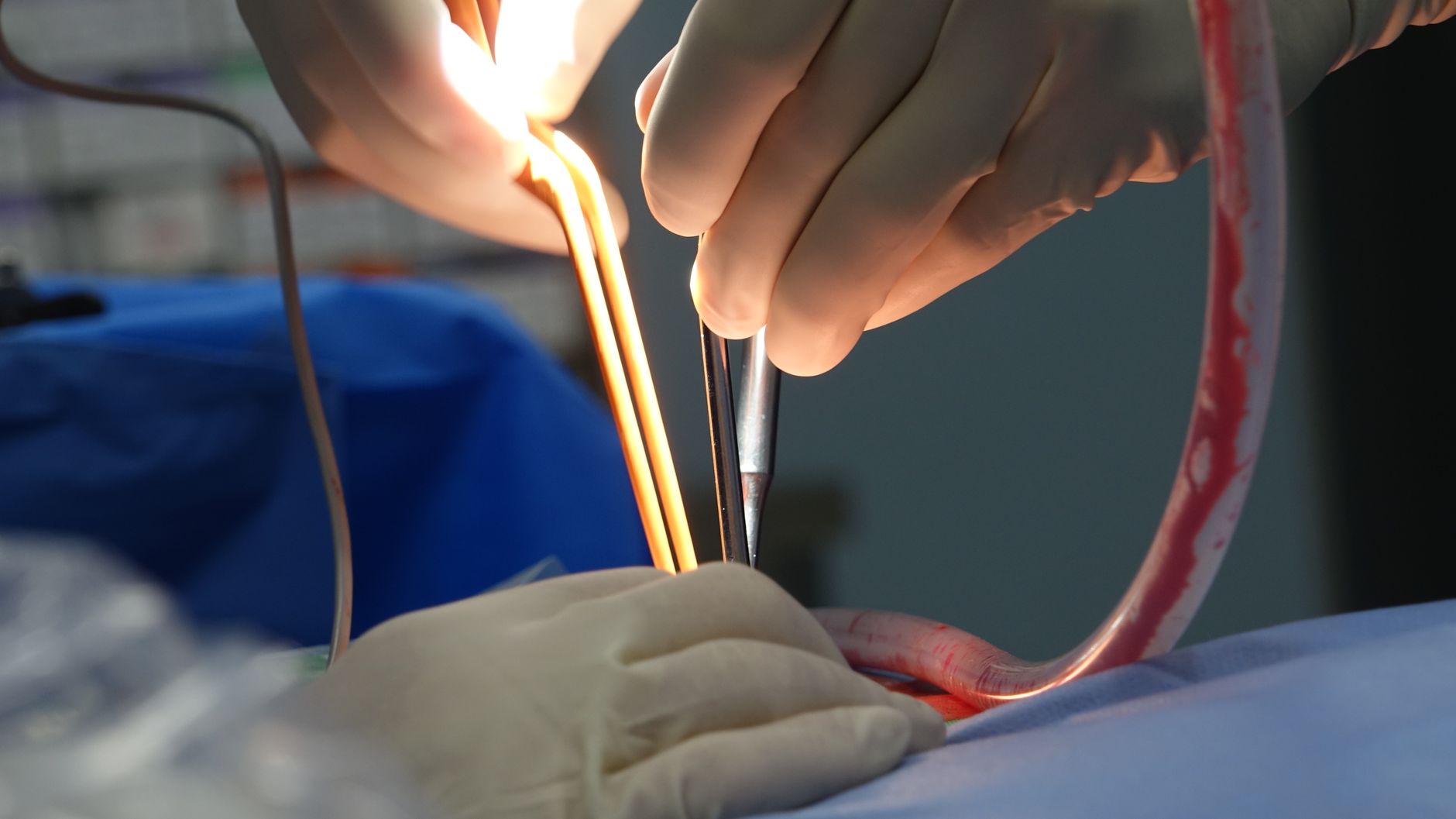
Liability for a catheter that fractures inside the body is proved or defeated by four categories of evidence: the retrieved fragment itself, the manufacturer's internal complaint and investigation file, the timing of its adverse-event reports to the FDA, and the medical record linking the fracture to a documented injury. No single one of those decides a case. A federal jury in Phoenix awarded $40 million in compensatory damages to Kimberly Divelbliss on September 4, 2026, finding Bard's implanted port catheter defective in design and inadequately warned — and a jury in the same multidistrict litigation had already found for the manufacturer on the warning claims.
A port catheter, or port, is a small reservoir implanted under the skin with a thin tube threaded into a large vein, used for repeated infusions. A PICC is a long catheter placed in an arm vein and advanced toward the heart. Both can crack, split, or shed a tip fragment, and both generate the same evidentiary fight: whether the plastic failed, or the placement, the patient's anatomy, or ordinary wear explains what happened.
Table of Contents
- The evidence that carried the $40 million verdict
- Why identical device evidence defeated the earlier case
- The complaint file and the 30-day clock
- Recalls and Early Alerts as proof of a known failure mode
- The fragment usually goes missing, and the FDA says counts mislead
- What to secure, and in what order
- Frequently Asked Questions
The evidence that carried the $40 million verdict
Divelbliss alleged her port was implanted in 2017 for recurrent IV treatment of an autoimmune condition, and that its failure caused two heart attacks, additional cardiac procedures, a permanent pacemaker, and ongoing medication. According to Drugwatch's account of the trial, the jury found the device defective in design and accompanied by inadequate warnings. It declined to award punitive damages, and Bard has moved for a new trial. That damages chain is the part a plaintiff controls.
Each link — the failure, the emergency intervention, the implanted pacemaker, the permanent medication — sits in a dated medical record created by someone with no stake in the lawsuit. Contemporaneous imaging, procedure notes, and device logs are the strongest evidence in most of these cases, because they were written before anyone was thinking about liability. The refusal of punitive damages is worth reading closely. A jury can conclude a design was unreasonably dangerous without concluding the manufacturer acted with conscious disregard. Those are separate findings resting on separate proof, and the second one almost always requires internal documents showing the company knew.
Why identical device evidence defeated the earlier case
The same MDL's first bellwether went the other way. As reported in LexisNexis Mealey's coverage, that jury found for Bard and Becton Dickinson on failure to warn and failure to instruct, and could not reach a verdict on design defect. The device was the same product line. The engineering testimony came from substantially the same pool of experts. What differs between two such trials is the individual record: how the catheter was placed, what the treating physicians documented, what the surgeon said about the warnings they actually read, and whether the fragment was recovered. A bellwether result predicts settlement posture, not outcome.
Anyone reading a large verdict as a valuation of their own claim is reading the wrong half of the docket. Regulatory pathway can end a case before any of this is reached. Riegel v. Medtronic, 552 U.S. 312 (2008), arose from a balloon catheter that burst during angioplasty, and held that the Medical Device Amendments' preemption clause bars state common-law claims imposing requirements different from or additional to the conditions of FDA premarket approval. A catheter approved through that premarket-approval route can therefore defeat the exact design and warning claims that a 510(k)-cleared catheter must answer. The first question in any catheter case is which pathway the specific device cleared.
The complaint file and the 30-day clock
Two federal regulations create the documents that make or break the notice element. Under 21 CFR 820.198, any complaint alleging a device failed to meet its specifications must be reviewed, evaluated, and investigated, with records of the dates, the results, any corrective action, and the name of the individual responsible for any decision not to investigate. That named individual is a deposition witness. Separately, 21 CFR 803.50 requires a manufacturer to report a device-related death, serious injury, or malfunction likely to recur to the FDA on Form 3500A within 30 calendar days of becoming aware of it — and within 5 working days in the circumstances set out in 803.53.
The gap between the internal complaint date and the report date is a documentary test. Ninety days between the two is not an argument; it is an exhibit. These files are obtained in discovery, not from a public database. A reader evaluating a potential claim should understand that the decisive documents are in the manufacturer's possession and become available only once litigation is underway.
Recalls and Early Alerts as proof of a known failure mode
Public FDA actions establish that a fracture mode exists and was recognized, which is a different thing from proving it caused one patient's injury. The FDA classified Medos International Sàrl's recall of the Cerenovus CEREBASE DA Guide Sheath — 1,343 units across parts GS9080SD, GS9090SD, and GS9095SD — as Class I after complaints of cracking in the distal catheter shaft, with risks of vascular injury and embolism. The firm initiated that recall on February 2, 2024. The BD PICC matter shows the causal mechanism named in a public document. The FDA issued an Early Alert on April 18, 2025 for material-fatigue leaks appearing as transverse or circumferential cracks in the catheter body, which BD traced to tubing resin that exceeded its melt flow index specification, alongside 10 serious injuries.
The agency upgraded it to a Class I recall on January 5, 2026. A resin out of specification is a manufacturing-defect theory with the manufacturer's own root cause attached. Two limits apply. A recall covers specific lot and part numbers, so the first task is matching the device in the patient's implant record against the recall's scope. And a Class I classification describes the severity of the potential harm, not the likelihood that it happened in one case.
The fragment usually goes missing, and the FDA says counts mislead
MAUDE, the FDA's public adverse-event database, shows how routinely the physical proof is lost. One braided-catheter report records a tip detaching inside the patient and being snared out with the device "not returned for evaluation." A 2024 port report closes as inconclusive for the reported fracture issue because no fracture was recorded in the medical review. Retrieval outcomes cut against causation as often as for it.
Endovascular retrieval series report roughly 90–95% success for retained fragments with 1–3% complications, and one 24-patient vascular-surgery series in the Journal of Vascular Surgery reported 79.2% — 19 of 24. A clean retrieval with no sequelae leaves little in the way of damages. The database tally does not rescue the case either: the FDA has cautioned that high fracture-report counts may reflect the high volume of usage of these devices rather than an actual high rate of fracture.
What to secure, and in what order
The evidence that decides these cases degrades fast, and most of it is controlled by the hospital rather than the patient. If the hospital discards the fragment after a preservation request, the loss becomes its own issue in the case. Spoliation arguments are weaker than the fragment would have been, which is why the written request should go out before the explant is scheduled rather than after.
- Ask the facility, in writing, to preserve the explanted catheter and any retrieved fragment, and to hold it unwashed and unsterilized for metallurgical or polymer analysis.
- Request the complete implant record: manufacturer, product name, catalog or part number, lot number, and the date and operator of placement.
- Request imaging from before and after the failure — chest films, fluoroscopy saved from the retrieval, and CT — since a fracture is often first visible on a radiograph read for something else.
- Collect every record for the downstream treatment, including procedures, devices implanted afterward, and current prescriptions, because that chain is the damages case.
- Check the device's part and lot numbers against FDA recall and Early Alert notices for that product line.
Frequently Asked Questions
Does a Class I recall mean my fractured catheter case is automatically strong?
No. A Class I classification describes how serious the potential harm is, not how likely it is that the recalled defect caused one patient's injury. The part and lot numbers in the implant record have to fall inside the recall's stated scope, and causation still has to be proved from the medical record.
My catheter fragment was removed with no complications. Is there still a claim?
There may be, but the damages are thin. Retrieval series report roughly 90–95% endovascular success with 1–3% complications, so an uneventful retrieval leaves little measurable harm beyond the additional procedure itself. The large verdicts involve downstream injury — repeat cardiac procedures, an implanted pacemaker, permanent medication.
Can I use the FDA's adverse-event database as evidence?
It is useful for establishing that a failure mode is known and reported, and individual reports can be revealing. It is poor proof of rate: the FDA has cautioned that high fracture-report counts may reflect heavy usage of these devices rather than a high fracture rate, and reports are unverified.
Why would preemption bar my claim when another patient's claim went to trial?
Because the two devices cleared different regulatory pathways. Riegel v. Medtronic bars state-law claims that impose requirements different from or additional to the conditions of a device's FDA premarket approval. A 510(k)-cleared catheter does not carry those approval conditions, so the same design and warning claims survive.