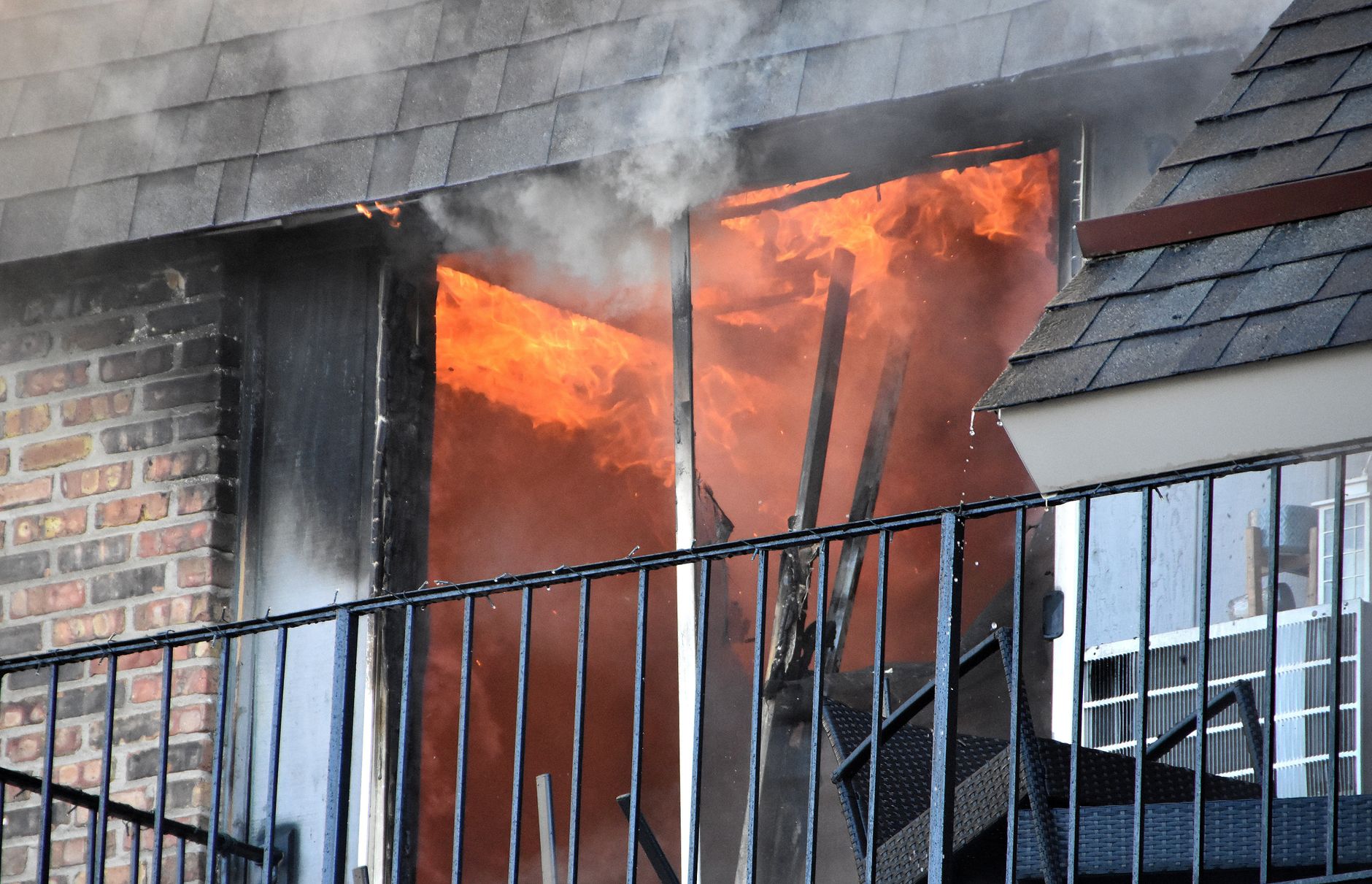
An exemplary-damages claim after an apartment fire spreading through open fire doors depends on proof the owner knew the doors would not self-close and ignored that extreme danger. Exemplary damages mean extra money a court awards to punish and deter, not to pay medical bills or property loss. Fire doors slow heat and smoke only when they swing shut and latch. When they stand open or fail to close, smoke fills halls and stairs fast and blocks escape.
Table of Contents
- Why do open fire doors turn deadly?
- What must owners do to keep doors working?
- When does Texas allow exemplary damages?
- What evidence shows awareness and indifference?
Why do open fire doors turn deadly?
Closed-door bedrooms stayed under 100°F in tests, while open-door rooms topped 1,000°F, according to the UL Fire Safety Research Institute in its fire-test summary. The same Institute testing measured about 100 PPM of carbon monoxide behind closed doors versus 10,000 PPM with doors open. The NYC Mayor's Office reported that the Jan.
9, 2022 Bronx apartment fire killed 17 people by smoke inhalation because evacuated residents left doors open. That open-door path let deadly fumes travel beyond the fire apartment. The U.S. Fire Administration advises high-rise residents to close stair and corridor doors when escaping so fire and smoke do not fill those paths.
What must owners do to keep doors working?
New York City housing rules require apartment and hallway doors to swing closed and latch by themselves. The NYC Department of Housing Preservation and Development states that rule in its self-closing-door guidance.
Local Law 111 of 2018 required multiple dwellings to have self-closing doors by July 31, 2021, according to the NYC Mayor's Office and NYC Council. The law also imposed a continuing owner duty to maintain them in good condition.
When does Texas allow exemplary damages?
Texas allows exemplary damages only on clear and convincing proof of fraud, malice, or gross negligence. The Texas Legislature sets that limit in Chapter 41 of the Civil Practice and Remedies Code. A unanimous jury must agree on both liability and the amount.
Texas defines gross negligence as an objectively extreme risk plus actual subjective awareness pursued with conscious indifference to safety. The Texas Legislature states that two-part test in the Section 41.001 definition of gross negligence. Conscious indifference means the actor knew the danger and still went ahead.
What evidence shows awareness and indifference?
An inspector who finds a door that cannot self-close, seal, or latch issues a Class C immediately hazardous violation, according to the NYC Department of Housing Preservation and Development. The owner then has 14 days to correct it, with reinspection within 20 days.
A Door Controls USA summary of NFPA 80 says swinging fire doors need annual inspection on both sides under 13 points, including full closure from fully open by the self-closing device. Records that can connect a failed door to that legal test include: Save photos, violation notices, work orders, lease notices, and medical records before meeting a lawyer.
- prior complaints, work orders, or Class C notices for doors that would not self-close or latch
- inspection logs showing missed annual checks or failed closing-device tests
- proof the repair deadline passed with doors still propped, wedged, or misaligned
- evidence the owner knew smoke spreads through open doors and left the risk in place