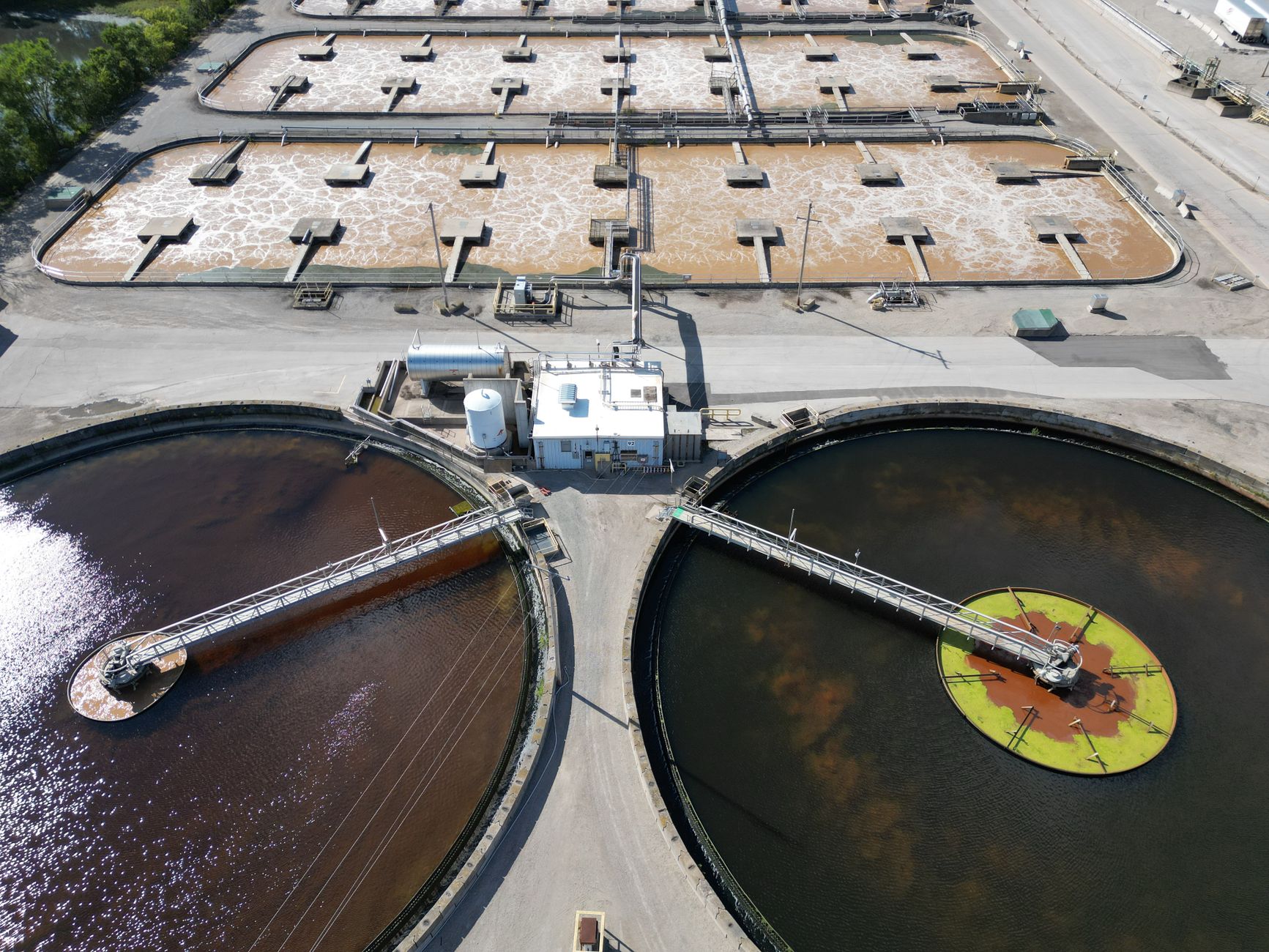
Lawyers price a wastewater fish-kill case as civil penalties plus economic benefit plus habitat restoration, reduced for proof and collection risk. Trial risk rises when permit records are clear, field readings tie the discharge to dead fish, and violations lasted many days. An NPDES permit is a Clean Water Act license that sets what a facility may discharge and where. A fish kill tests whether that limit was broken, whether the pollution caused the deaths, and what the deaths cost in penalties and restoration.
Official resources:
- Read the original report from Virginia — Use this primary source to review the complete report.
- Read the official notice from Cornell — Use this primary source to verify the official announcement.
Table of Contents
- What Creates the Penalty Exposure?
- How Does EPA Set the Settlement Floor?
- Who Can Sue After the Required Notice?
- How Is Kill Causation Proved?
- How Are Dead Fish Turned Into Restoration Dollars?
What Creates the Penalty Exposure?
Any violation of an NPDES permit condition implementing Clean Water Act sections 301, 302, 306, 307, 308, 318, or 405 brings federal compliance orders and civil judicial penalties, according to the U.S. EPA on EPA's Section 309 enforcement page. That hook matters because a fish kill often points back to a permit limit for solids, ammonia, oxygen demand, or toxics. The per-day number turns a short event into large exposure.
The 2024 inflation update raised the judicial civil maximum to $66,712 per day per violation, effective December 27, 2023, according to EHS Daily Advisor in EHS Daily Advisor's January 2024 penalty report. A leaking outfall, bypass, or failed treatment unit can therefore multiply fast across days and permit terms. Judges do not pick a penalty by instinct. They must weigh seriousness, economic benefit, violation history, good-faith efforts, economic impact on the violator, and other matters as justice requires.
How Does EPA Set the Settlement Floor?
EPA starts with economic benefit. Its BEN model computes benefit from delayed or avoided pollution-control spending using violation date, compliance date, cost year, and penalty-payment date. That calculation sets a floor. A defendant should not profit by deferring repairs, upgrades, or proper operation.
Prompt repair and documented spending reduce future benefit but do not erase past gain. EPA then tests ability to pay. Its ABEL model reviews three to five years of federal tax returns to judge whether a headline penalty would cripple a small municipal or private operator. Lawyers use that result to argue for a lower cash penalty paired with faster fixes or supplemental restoration.
Who Can Sue After the Required Notice?
A citizen suit needs 60 days' prior notice to EPA, the state, and the violator. It is barred if EPA or the state is already diligently prosecuting the same violations in court, under 33 U.S.C.
Section 1365. For readers weighing action, the sequence is practical: Filing during an active government prosecution risks dismissal. Waiting too long risks stale samples and weaker causation.
- Identify the permit, outfall, dates, and receiving water.
- Send proper 60-day notice and preserve mailing proof.
- Check whether regulators filed their own court case first.
- Save photos, dead-fish counts, smells, color changes, and agency report numbers.
How Is Kill Causation Proved?
Kill causation turns on contemporaneous calibrated field readings of pH, dissolved oxygen, temperature, and conductivity taken where dead fish are found, according to Virginia DEQ guidance in Virginia DEQ's fish-kill guidance document. Location matters as much as numbers. Upstream, outfall, and kill-zone readings show the gradient. Sewage and nutrient-rich wastewater typically kill by depleting dissolved oxygen until fish suffocate.
That mechanism makes dissolved oxygen the central trial exhibit. Low oxygen at the kill site, with higher oxygen upstream, supports liability. Defense risk comes from delay, uncalibrated meters, and missing controls. Warm weather, low flow, or an unrelated spill can muddy the picture. Lawyers discount settlement value when samples came late or lack chain-of-custody notes.
How Are Dead Fish Turned Into Restoration Dollars?
Natural-resource trustees scale damages with Habitat and Resource Equivalency Analysis. The method uses discounted service-acre-years or fish counts to price lost ecological services. The polluter pays the cost of restoration projects that replace those services. Delay increases the acres owed because the public loses use of the habitat longer.
That time penalty gives defendants reason to settle early and restore sooner, according to NOAA in NOAA DARRP's habitat equivalency page. For settlement talks, count the acres, fish, and lost years. Then compare restoration cost against litigation cost and penalty exposure. A credible restoration plan often moves talks more than argument over fish value alone.
You Might Also Like
- Pesticide Drift Injuring Workers on a Neighboring Property: How Do Lawyers Evaluate Settlement Value and Trial Risk?
- Lead Dust Escaping From a Demolition Project: How Do Lawyers Evaluate Settlement Value and Trial Risk?
- An Influencer Promoting an Investment Without Disclosing Payment: How Do Lawyers Evaluate Settlement Value and Trial Risk?