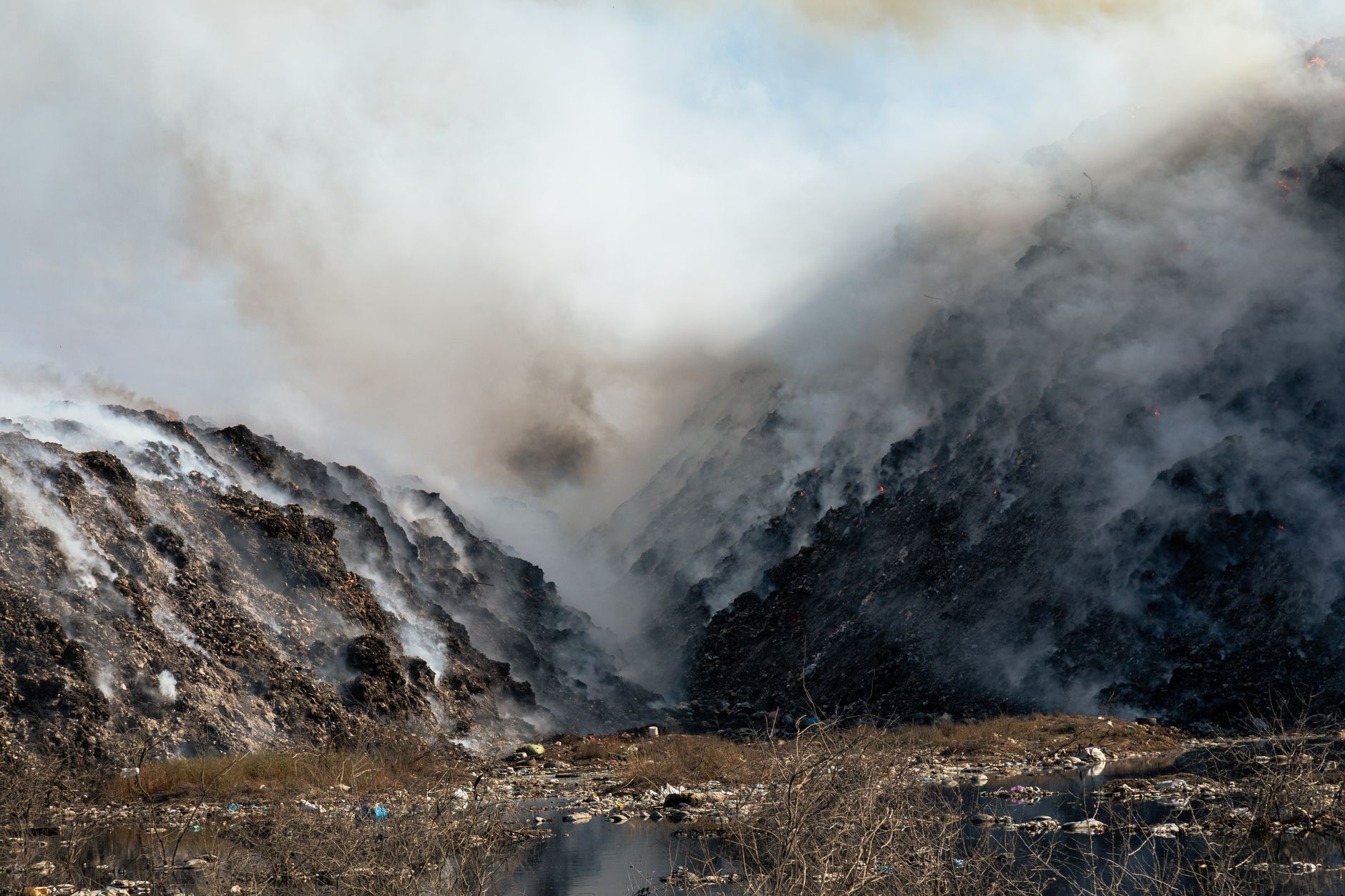
Punitive damages may be available when a landfill operator knowingly allowed a fire and toxic smoke to reach nearby homes. Punitive damages are extra money awarded beyond actual losses to punish particularly harmful behavior. The Moody, Alabama vegetative-waste landfill burned underground from late November 2022 for months and blanketed nearby homes, according to NPR reporting carried by KSUT Public Radio in its March 2023 account. Federal regulators took control in mid-January 2023 after sampling found heightened toxic chemicals.
Table of Contents
- How does landfill fire smoke reach neighbors?
- What did Moody residents experience?
- What conduct can support punitive damages?
- What must neighbors prove and what limits apply?
How does landfill fire smoke reach neighbors?
Decomposing waste in municipal solid-waste landfills creates gases that can escape into ambient air. Wind can then carry those gases into surrounding neighborhoods where residents breathe them, as described by the Agency for Toxic Substances and Disease Registry.
Fire makes exposure worse because it adds smoke and combustion chemicals to that drift. The health agency cautions that harm depends on whether harmful levels actually reach people. Evaluations are often limited by missing air data at the place of exposure.
What did Moody residents experience?
Nearby residents reported headaches, fatigue, chest pain and breathing difficulty, according to Waste360 reporting on the Moody fire in its February 2023 update. Some people temporarily left home to avoid the smoke.
Those details matter in injury claims because they link the fire to daily life. Symptoms, doctor visits, missed work and relocation costs help show actual harm. Punitive damages cannot stand alone without that underlying harm.
What conduct can support punitive damages?
Ordinary carelessness is usually not enough for punitive damages. They require particularly harmful behavior, as explained by Cornell Law School in its punitive damages explainer. The school describes the test as intentional unlawful action with knowledge that injury was likely. Wanton and willful misconduct can also qualify.
The LegalClarity Team defines that conduct as conscious disregard of a known serious risk. It ranks above ordinary negligence because the operator saw the danger and proceeded anyway. That finding can open the door to punitive damages. It can also affect insurance and immunity defenses.
What must neighbors prove and what limits apply?
Neighbors generally must prove entitlement by clear and convincing evidence. That standard means highly probable. It is higher than the preponderance standard used for compensatory damages, according to Cornell Law School citing Colorado v. New Mexico.
Useful proof often includes: Courts then check excessiveness under federal due-process guideposts. Those guideposts weigh reprehensibility, the ratio to actual damages and comparable penalties, as summarized by Bona Law PC in its appeal guide. State Farm v. Campbell rejected 145 million dollars in punitives against 1 million dollars in compensatories and warned that few awards above a single-digit ratio satisfy due process.
- prior warnings, inspections, complaints or fire-hazard findings
- evidence the operator delayed cleanup, control or warnings
- exposure-point air tests, wind records and medical records
- receipts for relocation, treatment and missed work