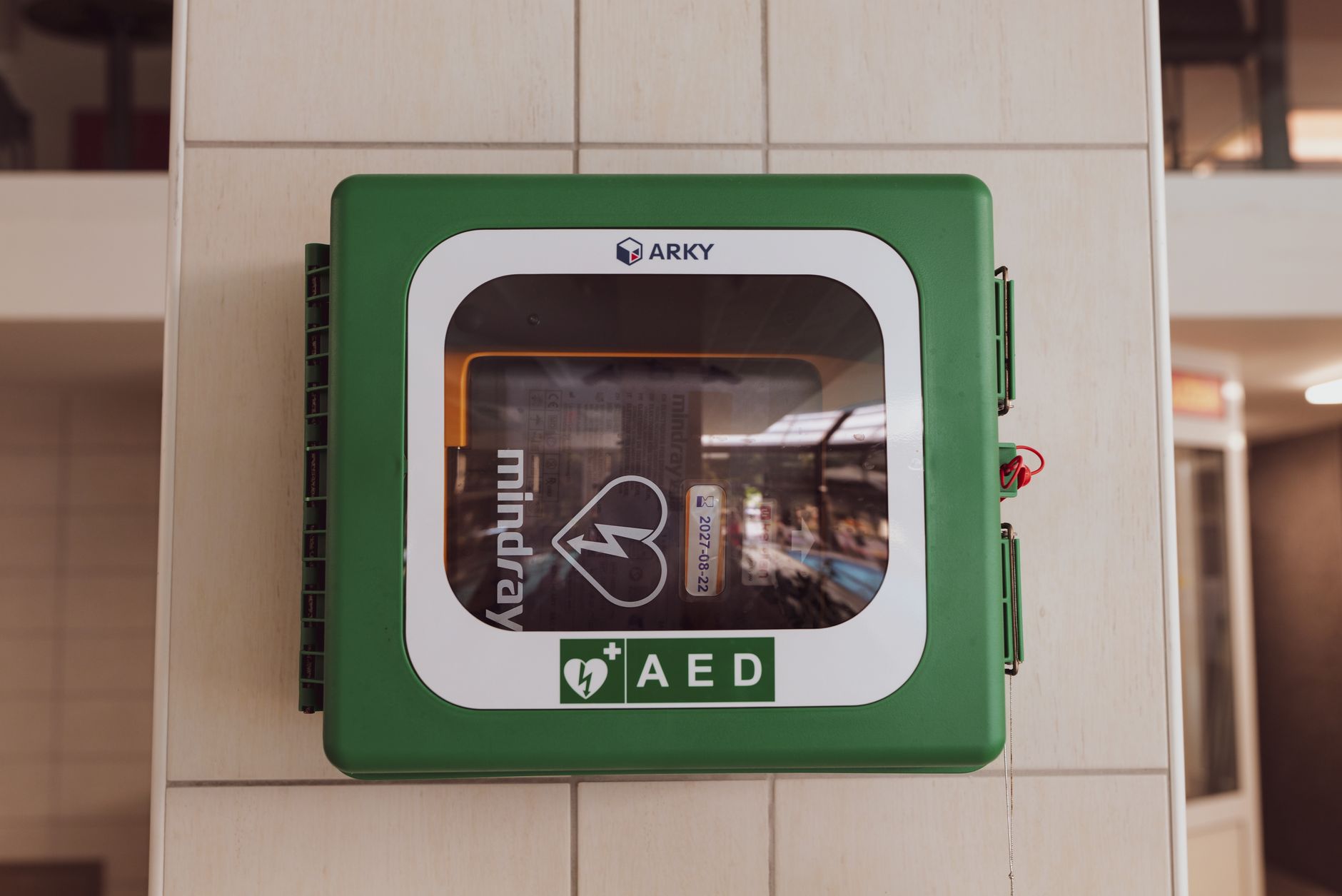
Lawyers value a failed-defibrillator case on two numbers: the strength of a claim that survives federal preemption, and the percentage chance the shock would have saved the person. An automated external defibrillator (AED) — the portable shock box kept in schools, gyms, airports and offices — is now a federally pre-approved class III device, which means most ordinary product-liability theories are legally dead before damages are ever discussed. That changes the whole shape of the case. Settlement value does not come from how shocking the failure was; it comes from a documented violation of a specific federal rule, a defendant who is not immunized, and expert proof that this particular arrest was survivable.
Official resources:
- Apply through Federalregister’s official page — Use this page to review requirements and apply directly.
- Explore the official data from FDA — Use this primary source to review the underlying data.
Table of Contents
- What actually failed, and why that decides everything
- Why federal preemption caps most design claims
- The reporting rules that create real leverage
- Who can be sued, and who is immune
- Causation is the trial risk, and it cuts both ways
- What to preserve in the first weeks
- Frequently Asked Questions
What actually failed, and why that decides everything
An AED failure is rarely one event. The pads can be expired or missing, the battery can be flat, the self-test can have been flashing a fault for weeks, the unit can be locked in an office nobody could open, or the device can genuinely malfunction mid-rescue. Lawyers sort these into two piles: the device was defective, or the owner failed to maintain it. The maintenance pile is worth more in most cases, because it is easier to prove and harder to defend.
A dead battery leaves a service record. A cabinet with a padlock leaves photographs. An expired pad leaves a date printed on the packaging. The device pile is where the law turns hostile, for reasons that have nothing to do with how badly the machine performed.
Why federal preemption caps most design claims
The FDA's final order published January 29, 2015 requires premarket approval (PMA) applications for AED systems and their accessories, keeping them in class III because adverse-event reports and recalls showed the devices needed closer oversight. PMA is the FDA's most rigorous review, and it carries a legal consequence most families never hear about. Under the Supreme Court's decision in Riegel v. Medtronic, 552 U.S. 312 (2008), federal law preempts state-law claims that impose requirements "different from, or in addition to" federal ones for PMA-approved devices.
In plain terms: you generally cannot tell a jury the FDA-approved design should have been safer, or that the FDA-approved warnings should have said more. Riegel left one door open — the "parallel claim." A state damages claim premised on an actual violation of an FDA requirement survives. But the door is narrow. The court in *Ilarraza v. Medtronic* held that generic good-manufacturing-practice allegations are not enough, and Ninth Circuit law requires the state duty to be genuinely equivalent to the federal one. A complaint that does not name the specific regulation violated usually gets dismissed, and a dismissed claim has no settlement value at all.
The reporting rules that create real leverage
This is where experienced counsel spend their discovery budget. Under 21 CFR 803.50, a manufacturer must report to the FDA within 30 calendar days of becoming aware that a marketed device may have caused or contributed to a death or serious injury, or malfunctioned in a way likely to cause such harm if repeated. The eCFR text of Part 803 also deems the company aware the moment any employee is — a low threshold that makes late or missing reports provable. A missing report does two things to value. It supplies the specific federal violation a parallel claim needs, and it supports a punitive-damages theory, because the company knew and said nothing.
The owner of the device has its own duty. Section 803.30 requires a device user facility — a hospital, and in many circumstances other institutional owners — to report a device-related death to the FDA, and to the manufacturer if known, within 10 work days. Silence after a failure becomes evidence against the co-defendant rather than a quiet administrative lapse. Failure histories are also on the public record. FDA Summary of Safety and Effectiveness Data filings document real-world outcomes lawyers subpoena against: the Powerheart AED family's summary reports 19 deaths and 19 malfunctions across several model numbers, and the Defibtech/Lifeline summary reports 17 deaths, 4 serious injuries and 22 malfunctions.
Who can be sued, and who is immune
Good-Samaritan immunity is the first thing defense counsel raises, and it is broad. Under 42 U.S.C. § 238q, both the person who used or attempted to use an AED and the entity that acquired it are immunized from civil liability.
That is why plaintiffs almost never sue the bystander who grabbed the box. The statute's exceptions are the case. The current text of § 238q withholds immunity for: Read that list and the target becomes obvious. The claim is pleaded against the facility's maintenance and training program — the inspection log, the assigned responder, the service contract — not the rescuer's technique.
- willful or criminal misconduct, gross negligence, or reckless misconduct
- licensed health professionals acting within their scope of practice
- an acquirer that failed its training duties
- an acquirer that failed its maintenance duties
Causation is the trial risk, and it cuts both ways
Defense experts open with the baseline. The American Heart Association's 2025 Adult Basic Life Support guideline reports survival to hospital discharge of 10.5% after adult out-of-hospital cardiac arrest, with bystander CPR in 47.7% of cases and a bystander AED used in only 7.9%. A defendant argues from those figures that the patient would most likely have died anyway, which is a genuine problem for a plaintiff carrying the burden of proof. Plaintiffs answer with the subset that matters.
AHA-published data on observed, shockable public arrests found 66.5% survival to discharge when a bystander AED delivered the shock versus 43.0% when EMS did, and an ILCOR scientific statement reports bystander AED use associated with an odds ratio of 1.73 (95% CI 1.36–2.18) for survival. That gap is the quantified lost chance, and it is what converts a sympathetic death into a number. The limit is specific and lawyers test for it early: the measured benefit disappeared where the arrest was not witnessed. An unwitnessed collapse, a non-shockable rhythm, or a long delay before anyone reached the victim will suppress value regardless of how badly the device or its owner performed.
What to preserve in the first weeks
Evidence in these cases degrades fast, and much of it belongs to the defendant. Practical steps before counsel is even retained: The event log is the single most valuable item, and it is also the easiest to overwrite: switching the unit on for a later rescue can write over the data from this one.
- Ask in writing that the device be preserved untouched — its internal event log records whether it was powered on, what rhythm it read, and whether it advised or delivered a shock.
- Request the maintenance and self-test records, the pad and battery purchase dates, and the names of trained responders on duty.
- Photograph the cabinet, its signage, and the pad packaging expiration dates.
- Obtain the EMS run report and the 911 call timeline, which fix the intervals experts will model.
- Check whether the owner filed the § 803.30 report within 10 work days.
Frequently Asked Questions
Can the manufacturer still be sued at all after Riegel?
Yes, but only on a parallel claim tied to a specific federal violation — a manufacturing deviation from the approved process, or a late or missing adverse-event report under 21 CFR Part 803. A general "the design was unsafe" theory will not survive.
Does the person who used the AED face liability?
Almost never. 42 U.S.C. § 238q immunizes the rescuer, with exceptions for gross negligence, reckless or willful misconduct, and licensed health professionals acting in their scope.
Why do lawyers ask whether the collapse was witnessed?
Because the survival advantage associated with bystander AED use disappeared in the AHA-published data where the arrest was unwitnessed, which undercuts proof that the working device would have changed the outcome.
You Might Also Like
- A Pacemaker Recall Affecting Dependent Patients: How Do Lawyers Evaluate Settlement Value and Trial Risk?
- A Hernia Mesh Implant Followed by Revision Surgery: How Do Lawyers Evaluate Settlement Value and Trial Risk?
- A Defibrillator Failing During a Cardiac Emergency: Does the Conduct Rise From Negligence to Gross Negligence?