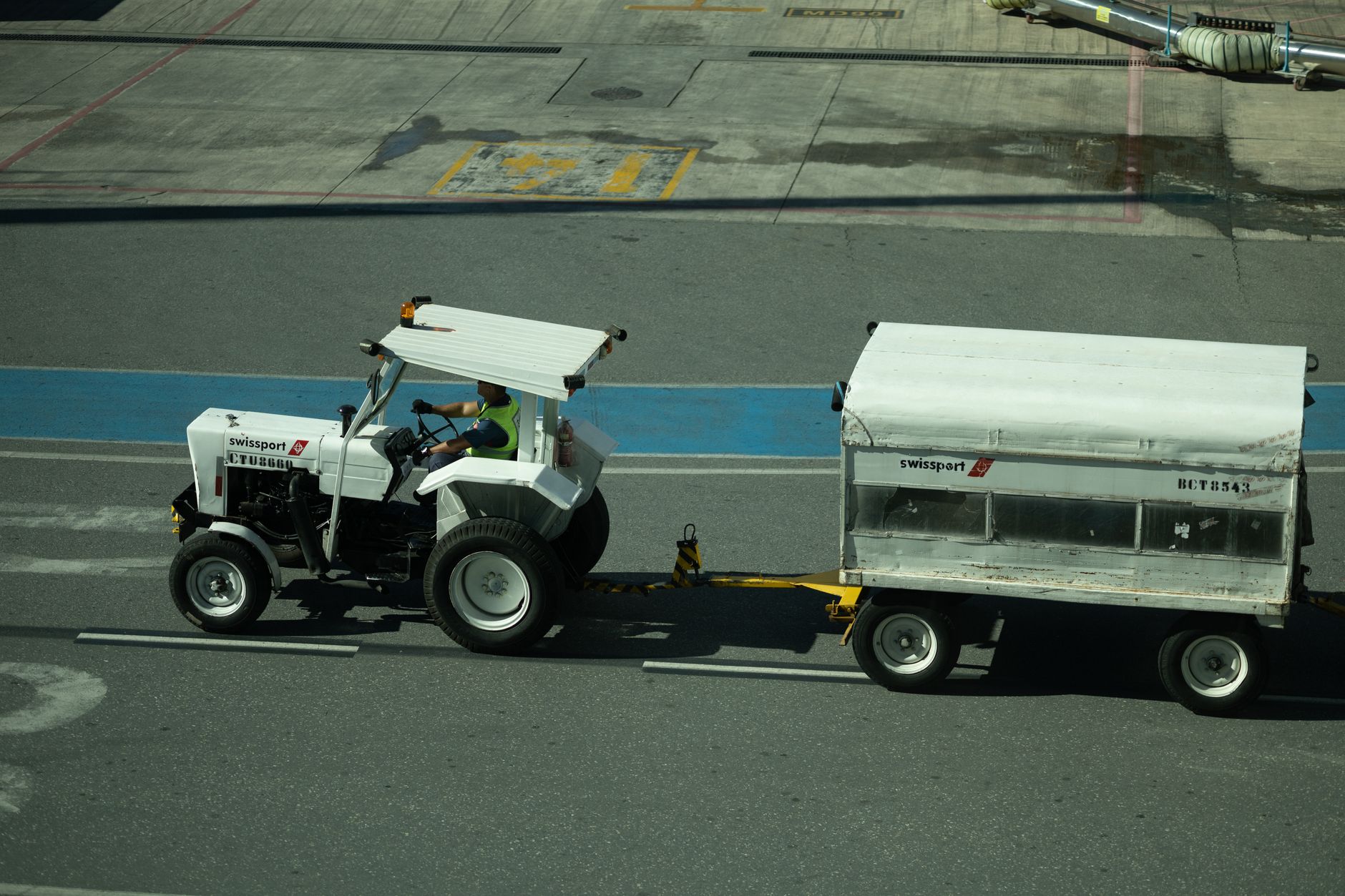
Liability for a baggage cart strike turns on equipment, training, and driving proof, not the injury alone. Daily logs, training files, ramp video with vehicle data, and witness statements can prove fault—or defeat it when they show equipment and careful driving.
A ramp worker is ground crew who loads bags, guides vehicles, and works around moving tugs on the apron. A baggage cart is the towed trailer, while the tug is the powered vehicle that pulls it. Liability means legal responsibility to pay for harm caused by unsafe equipment or careless operation.
Table of Contents
- Did daily checks keep the tug safe?
- Was the driver trained for ramp work?
- What do video and vehicle data show?
- How do you preserve proof before it disappears?
Did daily checks keep the tug safe?
Federal OSHA requires powered trucks, including tugs, to be examined at least daily before service and removed when safety defects appear daily examination standard. The pre-shift checklist, defect report, and repair log are therefore central proof. A missing or rushed check points toward fault, while a complete check supports a defense.
Look for brake, steering, horn, lights, tires, hitch, and warning-device entries. Compare the checklist with shop records for repeat complaints, deferred repairs, and parts orders. A clean form paired with a worn hitch or bald tires hurts credibility more than it helps.
Was the driver trained for ramp work?
OSHA training guidance requires formal instruction, hands-on training, and workplace evaluation for competence, plus refresher training after unsafe operation or incidents powered-truck training guidance. The driver file should show dates, trainer names, topics, test results, and observed driving. Gaps, expired evaluations, or no refresher after a prior event favor liability.
A strong defense shows ramp-specific training on speed limits, pedestrian zones, spotters, backing, and hitching. It also shows enforcement through discipline, retesting, and supervision notes. Claims of experience alone do not replace documented evaluation.
What do video and vehicle data show?
Clean Fleet Report says investigators use telematics and GPS, dash and ramp video, inspection logs, and driver files fleet-investigation methods. They use these records to reconstruct speed, braking, visibility, and mechanical condition. Together these records can place each person, show the travel path, and test claims about lookout and speed.
Video may show a blocked lane, a blind turn, rain glare, or a worker outside a marked walkway. Telematics may show hard braking, fast travel, or a sudden stop. Physical marks, cart damage, clothing transfers, and photos tie the electronic record to the contact point.
How do you preserve proof before it disappears?
Legal Futures notes cameras show one viewpoint and telematics needs interpretation, so corroborate them with witnesses, photos, incident reports, and physical evidence limits of video and telematics evidence. That corroboration fails when video overwrites, a tug is repaired, or memories fade. Fast preservation often decides which story survives.
Ask in writing for each item below and keep proof of the request. Do not let the tug return to full service before inspection and photos. A prompt hold letter, photo set, and witness canvass prevent overwrite and repair from erasing fault—or clearing a careful crew.
- ramp and gate video for two hours before and after impact
- tug telematics, GPS, and event downloads with interpretation notes
- pre-shift checklists, work orders, and hitch and brake records
- driver training, evaluation, and discipline files
- incident reports, witness names, photos, and the tug and cart for inspection