
The average settlement for a herniated disc from a car accident typically ranges from $50,000 to $75,000, though settlements can be as low as $20,000 for mild cases or exceed $1,000,000 for severe injuries requiring surgery. When cases go to jury trial, the median verdict is $75,000, with average jury verdicts reaching $350,000 in more contested claims. For example, a 45-year-old driver who suffered a herniated disc in L4-L5 requiring six months of physical therapy and ongoing pain management might expect a settlement around $60,000 to $80,000, depending on the defendant’s insurance limits and the jurisdiction.
The settlement value depends heavily on several critical factors: the extent of the disc herniation, whether surgery was required, the duration and cost of medical treatment, lost wages, and the impact on your ability to work. A herniated disc that requires only conservative treatment may settle for $20,000 to $50,000, while one requiring spinal surgery can easily exceed $100,000. Geography also matters—Florida settlements average $300,000 to $530,000, while Georgia typically sees $50,000 to $750,000, and California ranges from $15,000 to $85,000 for typical cases, jumping over $100,000 for permanent injuries.
Table of Contents
- What Determines a Herniated Disc Settlement Amount in Car Accident Claims?
- How Severity Levels Impact Your Settlement: Mild, Moderate, and Severe Cases
- Regional Differences in Herniated Disc Settlements Across the United States
- The Impact of Surgery on Settlement Value and Negotiation Leverage
- How Medical Documentation and Treatment Consistency Affect Your Settlement Outcome
- Lost Wages, Permanent Disability, and Long-Term Damage Calculations
- Insurance Limits and Settlement Reality: When Coverage Doesn’t Match Your Injury
- Conclusion
What Determines a Herniated Disc Settlement Amount in Car Accident Claims?
The amount you receive depends on demonstrable damages: medical expenses, imaging costs (MRI, CT scans), specialist visits, and ongoing treatment. A herniated disc caused by impact in a rear-end collision where the responsible party has clear liability and adequate insurance will typically settle higher than a borderline fault case with limited coverage. The medical records become your proof—if you have six months of physical therapy bills and ongoing chiropractic treatment, your claim is stronger than one with minimal documentation.
Treatment method is the single strongest predictor of settlement value. According to settlement data, cases treated with surgery typically settle above $50,000 to $100,000, while cases managed with physical therapy alone rarely exceed $50,000. A 38-year-old warehouse manager who had a herniated disc surgically repaired and required 12 months of post-operative rehabilitation would likely settle in the $150,000 to $350,000 range, assuming the defendant’s insurance was adequate. Without surgery, the same injury might settle for $35,000 to $60,000.

How Severity Levels Impact Your Settlement: Mild, Moderate, and Severe Cases
Mild herniated disc cases—those treated successfully with physical therapy, chiropractic care, or anti-inflammatory medication without requiring advanced intervention—typically settle between $20,000 and $50,000. These settlements cover medical bills, a reasonable multiplier for pain and suffering, and some lost wages if the injury caused temporary work absence. A mild case might involve 8 to 12 weeks of treatment and minimal long-term effects. Moderate cases involve multiple affected discs, longer treatment timelines, or steroid injections and more intensive rehabilitation. These settlements range from $50,000 to $150,000.
This category includes situations where conservative treatment is largely successful but takes 6 to 12 months and the injured party experiences ongoing discomfort. An important limitation: moderate cases that plateau without further improvement sometimes stall in settlement negotiations because the defendant’s insurer questions whether additional damages are truly ongoing or psychological. Severe cases requiring surgical intervention, spinal fusion, or cases with permanent neurological damage settle from $200,000 to $1,000,000 or more. These include situations where nerve damage causes chronic pain, loss of function, or permanent disability affecting career prospects. A severe case with surgery and permanent limitations would justify settlements at the upper end of this range.
Regional Differences in Herniated Disc Settlements Across the United States
Settlement averages vary significantly by state due to cost-of-living differences, jury tendencies, medical expenses, and state-specific damage caps. Florida settlements for herniated disc injuries are notably high, typically ranging from $300,000 to $530,000, reflecting both the state’s generous approach to pain and suffering damages and the high volume of car accident litigation. In Georgia, settlements range from $50,000 to $750,000 depending on severity and the insurer involved.
California settlements follow a different pattern, with typical herniated disc cases settling between $15,000 and $85,000, though permanent injury cases exceed $100,000. This lower range reflects California’s higher baseline medical costs being built into defendant expectations and insurance rate structures. A case identical in injury severity might settle for $45,000 in California but $300,000 in Florida, purely due to regional factors. This geographic variation is why your attorney’s local experience matters—they understand what juries and insurers in your jurisdiction typically award.
The Impact of Surgery on Settlement Value and Negotiation Leverage
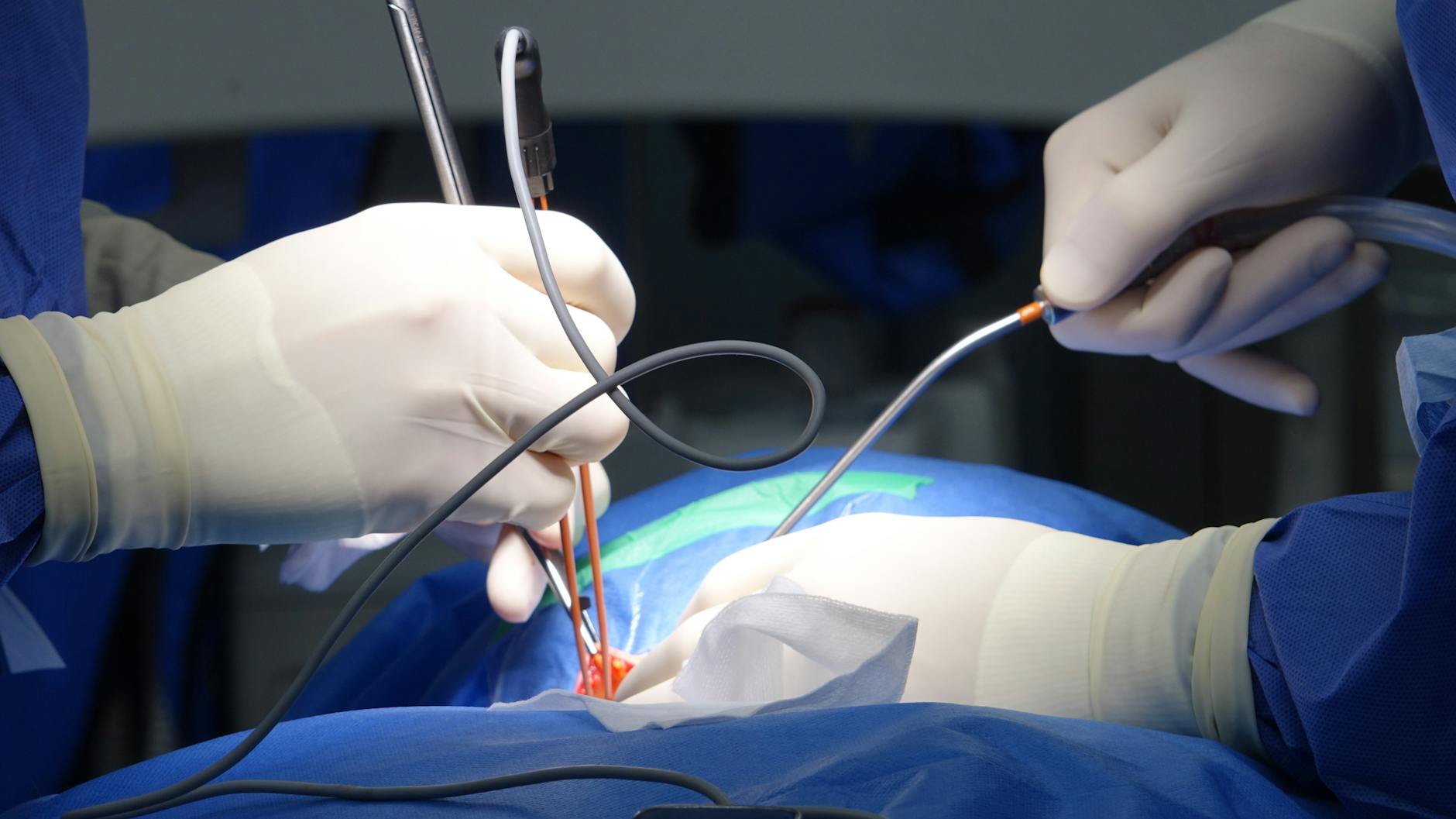
Whether your herniated disc required surgery is the clearest dividing line in settlement negotiations. Surgery transforms a claim from soft-tissue injury territory into serious medical intervention, immediately increasing case value. Cases with surgery typically settle above $50,000 to $100,000, while cases without surgery rarely reach $50,000 unless there are exceptional circumstances like nerve damage or permanent impairment.
The surgery decision also affects your negotiating position because it demonstrates the medical establishment treated your condition seriously. An MRI showing a herniated disc that was managed conservatively can be disputed—the defendant’s insurer may argue the injury was minor and resolving on its own. Surgical records are harder to argue. However, a trap many injured parties fall into is assuming insurance will automatically pay more once surgery is involved; the key is proving the surgery was medically necessary and directly caused by the accident, not a pre-existing condition or a surgery you were already planning.
How Medical Documentation and Treatment Consistency Affect Your Settlement Outcome
Strong medical documentation dramatically increases settlement value because it removes ambiguity about whether the herniated disc was actually caused by the accident and how serious it was. Inconsistent treatment—seeing a doctor once, waiting three months, then seeking care again—signals to the insurance adjuster that your pain may not be as severe as claimed. By contrast, consistent weekly physical therapy visits, regular follow-ups with a spine specialist, and documented imaging create an unbreakable chain of evidence. A critical warning: gaps in treatment are one of the most common settlement-killers.
If you were injured in January but didn’t seek medical attention until April, the insurer will assume the injury resolved and you’re exaggerating current symptoms. You should seek medical attention immediately after an accident, even if you feel okay initially, because herniated discs often worsen over days and weeks. Another limitation is that settlement amounts assume you follow medical advice. If your doctor prescribed six months of physical therapy and you attended two sessions, your settlement value will be capped lower because you haven’t followed the treatment plan.

Lost Wages, Permanent Disability, and Long-Term Damage Calculations
If the herniated disc kept you from work—either temporarily during recovery or permanently because the injury ended your career—these losses become major settlement components. A six-week absence from work might add $5,000 to $15,000 to a settlement, depending on your income. Permanent disability is worth far more: if the herniated disc prevents you from returning to your profession, the settlement must account for lost lifetime earnings.
Consider a 50-year-old construction supervisor earning $75,000 annually who can no longer perform his job after the accident. Rather than settle for $80,000, he might pursue $400,000 or more to account for 15 years of reduced earning capacity. This requires vocational rehabilitation evidence and sometimes expert testimony about your diminished earning potential.
Insurance Limits and Settlement Reality: When Coverage Doesn’t Match Your Injury
Even if your herniated disc claim is worth $200,000, if the defendant has only $50,000 in liability coverage, that’s your practical ceiling. Many car accidents involve defendants with minimal insurance, and you’ll receive the policy limit regardless of your damages.
This is why your own underinsured motorist coverage becomes crucial—if you have it, you can recover additional compensation from your own policy after the defendant’s policy is exhausted. Some injured parties pursue personal injury protection (PIP) coverage on their own auto policy as an interim step, recovering medical expenses and lost wages faster while the liability settlement is negotiated. Knowing the defendant’s insurance limits early in the process helps your attorney set realistic settlement expectations and decide whether pursuing a lawsuit (which can take years and cost money) makes financial sense.
Conclusion
The average herniated disc settlement from a car accident is $50,000 to $75,000, but your specific recovery depends on injury severity, whether surgery was required, the quality of your medical documentation, and your state’s settlement norms. Mild cases settle for $20,000 to $50,000, moderate cases for $50,000 to $150,000, and severe cases with surgery or permanent disability for $200,000 to $1,000,000 or more.
Geography significantly impacts settlements—expect higher awards in Florida ($300,000-$530,000) and Georgia ($50,000-$750,000) compared to California ($15,000-$85,000 typical). To maximize your settlement, seek immediate medical attention after the accident, maintain consistent treatment with documented follow-ups, obtain clear imaging evidence of the herniation, and work with an attorney familiar with herniated disc valuations in your jurisdiction. Your settlement depends not on the injury alone, but on the evidence supporting it.