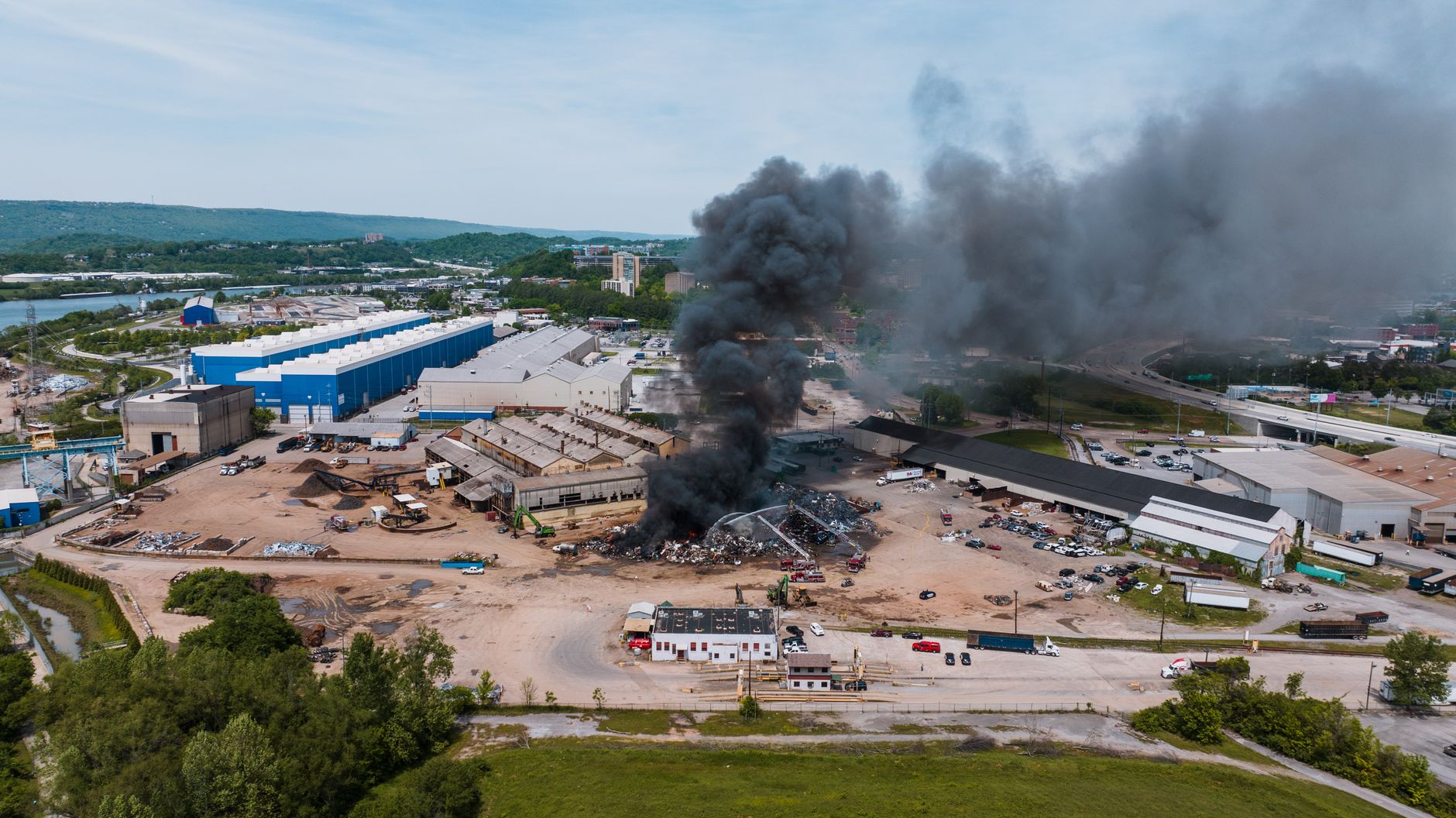
Time-stamped air tests, chemical inventory records, emergency release notices, and prompt medical records prove or defeat liability after a warehouse fire releases toxic smoke. Liability here means the legal duty to pay for cleanup and injuries from a hazardous-substance release. Save everything early. Smoke spreads fast, monitors move on, and wind, distance, and health history can weaken a claim without paper proof.
Table of Contents
- Who can be held responsible for the release?
- Did the warehouse disclose what it stored?
- Was fast emergency notice given?
- What did the air actually contain?
- Can medical records tie smoke to injury?
Who can be held responsible for the release?
Federal cleanup law casts a wide net. According to the U.S. EPA in the Superfund liability overview, current and former owners and operators, arrangers, and transporters face strict, joint-and-several, and retroactive liability for hazardous-substance releases. Strict means careless conduct need not be shown.
Joint-and-several means one party can face the full bill. Retroactive means older conduct can still count. For neighbors and workers, that matters. A warehouse company cannot defeat a cleanup claim by saying it followed industry practice.
Did the warehouse disclose what it stored?
Facilities that store hazardous chemicals must keep safety data sheets and share chemical information for public availability. According to the U.S. EPA in the hazardous chemical inventory reporting guidance, they must file the sheets or chemical list plus an annual inventory by March 1 with the state commission, local planning committee, and fire department.
Those Tier II inventories and data sheets show what could burn. They list names, amounts, and hazards. Missing or late filings hurt a defense. Complete filings help both sides fix the source and warn responders.
Was fast emergency notice given?
A facility that releases a reportable amount of an extremely hazardous substance or CERCLA hazardous substance must give immediate emergency release notice. The Connecticut State Emergency Response Commission guidance on federal release rules says notice must also go to the National Response Center and state and local emergency authorities. Call logs, dispatch records, and timestamps test that duty.
A quick call supports a careful-operator defense. Silence or delay points the other way. It can also affect who was exposed and for how long.
What did the air actually contain?
Real-time monitoring often decides exposure. According to the U.S. EPA in the response profile for the Veterans Industrial Park fire, EPA sent an On-Scene Coordinator for a New Jersey bulk-commodity warehouse fire involving polystyrene beads and mobilized its Emergency Response Team and a contractor for real-time monitoring of particulates and toxic combustion products plus SUMMA-canister sampling for volatile organics.
That model shows useful proof: dated particulate readings, combustion-product data, and canister results tied to place and time. Residents can match symptoms to plume hours. Defendants need the same files. Alarms, sprinkler records, and inspection history help show the fire response, but they do not replace air data.
Can medical records tie smoke to injury?
Smoke harm depends on dose, time, and health. ATSDR guidance in the medical management guidelines for hydrogen chloride states that the gas intensely irritates the nose, throat, and respiratory tract, with brief exposure at 35 ppm causing throat irritation and 50-100 ppm barely tolerable for one hour, while high exposures can cause corrosive injury, pulmonary edema, and death. The U.S.
EPA explains that fine particles under 10 micrometers, especially PM2.5, can enter deep lung and blood and cause cough, airway irritation, lower lung function, asthma attacks, heart attacks, and early death in people with heart or lung disease. Prompt clinic or emergency visits link exposure to effect. Wind direction, distance, duration, prior disease, and mixed pollutants can defeat causation. To protect a claim, act fast:.
- photograph smoke, time, and location, and keep phone timestamps
- save air-quality alerts, evacuation orders, and clinic papers
- get care the same day for breathing, eye, throat, or chest symptoms
- ask for Tier II inventories, data sheets, and monitor data before files move