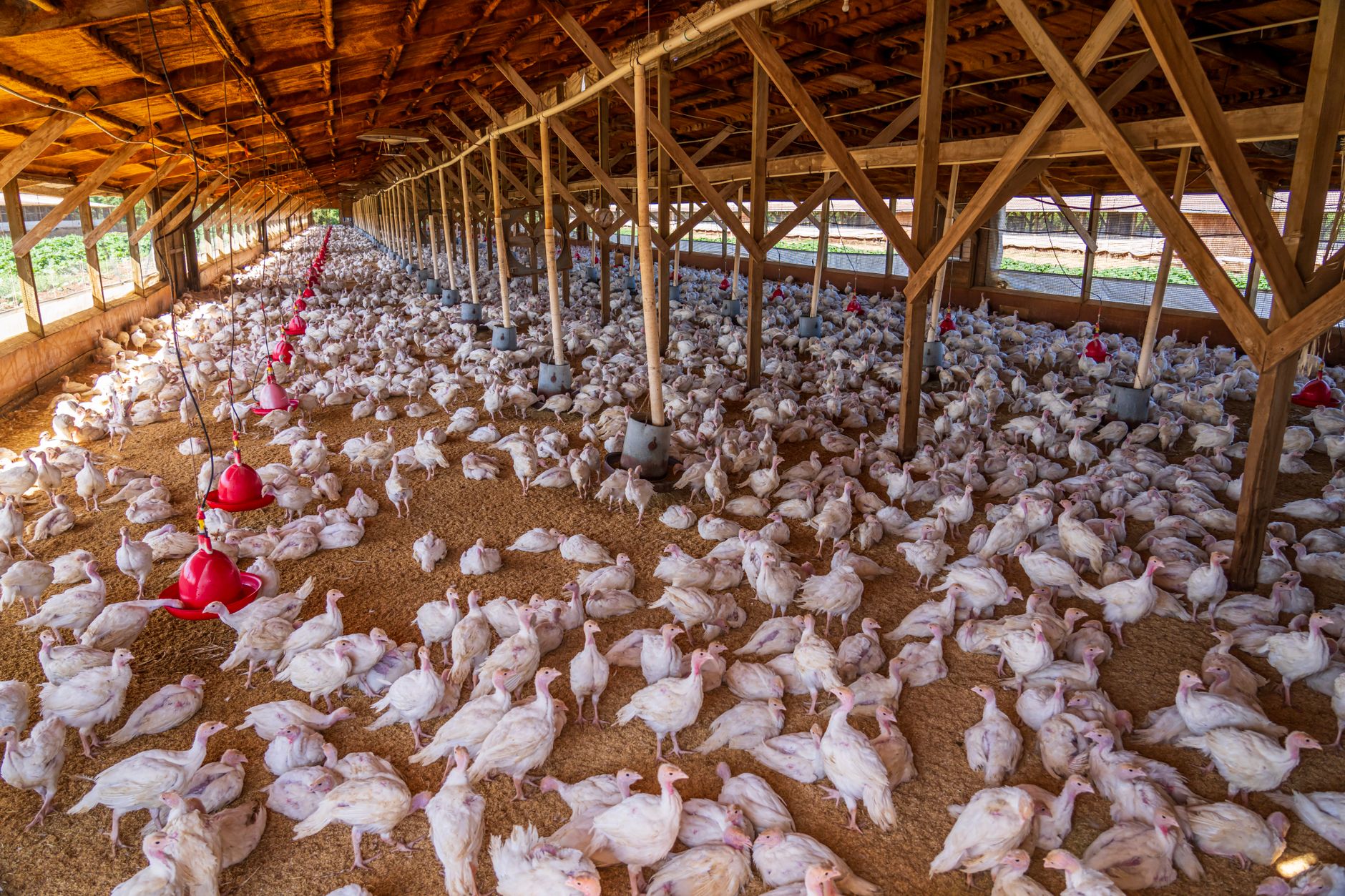
The 2026 poultry lawsuits represent a significant convergence of litigation affecting multiple segments of the industry, but available evidence does not identify specific trucking company defendants or claims. Instead, the major 2026 poultry litigation centers on poultry processors, data aggregators, and environmental defendants, with settlements exceeding $600 million when combined. The largest cases involve price-fixing conspiracy claims against companies like Tyson Foods and Perdue Farms, worker compensation suppression by poultry processors, and decades-old environmental pollution disputes resolved through settlements announced in mid-2026. The judicial activity in 2026 reflects a maturation of prior litigation brought by farmers, workers, consumers, and state environmental agencies.
On March 10, 2026, the U.S. District Court for the District of Maryland (Honorable Stephanie A. Gallagher presiding) approved final injunctive relief in the worker compensation case, while subsequent months saw settlement announcements regarding price-fixing and environmental contamination. The absence of trucking company-specific claims in the 2026 documented settlements suggests that litigation pressure in the poultry industry has focused on primary processors and supply-chain data manipulation rather than transportation providers.
Table of Contents
- What Are the Major 2026 Poultry Litigation Settlements?
- Worker Compensation Claims and Antitrust Allegations in Poultry Processing
- Environmental Pollution Settlements and Regulatory Remediation
- Price-Fixing Class Action Status and Claims Auditing Process
- Agri Stats’ Role as Data Aggregator Defendant and Conspiracy Facilitation
- March 10, 2026 Final Approval and Injunctive Relief Orders
- Data Availability and Claims Timeline as of June 2026
What Are the Major 2026 Poultry Litigation Settlements?
Three distinct categories of poultry litigation produced major settlements or approvals in 2026. First, a $398.05 million settlement for poultry processing workers addressing alleged wage suppression since 2019 received final court approval on March 10, 2026, including Perdue Farms Inc., Tyson Foods Inc., and unnamed additional poultry company defendants. Second, a $203.35 million consumer class action settlement addresses allegations of price-fixing conspiracy among poultry processors, with claims currently under audit as of June 17, 2026, pending determination of class counsel’s attorney fee requests.
third, a $44 million environmental settlement was announced in July 2026 involving six poultry company defendants and Oklahoma state authorities over poultry waste pollution spanning a 21-year litigation history. The settlement structure reveals how litigation against large poultry processors incorporates multiple damage theories. The worker compensation case added a third defendant category—Agri Stats, a data aggregator accused of facilitating the alleged conspiracy—indicating that claims extend beyond direct processors to support systems. The environmental settlement allocated $41.6 million for cleanup, $1.9 million for compliance auditor costs, and $420,000 in penalties, demonstrating how court-approved settlements distribute recovery among remediation, ongoing oversight, and deterrence components.
Worker Compensation Claims and Antitrust Allegations in Poultry Processing
The worker compensation settlement stems from allegations that poultry processors conspired under federal antitrust laws to suppress worker wages and benefits from 2019 onward. The $398.05 million recovery was approved as final injunctive relief on March 10, 2026, with the addition of injunctive orders governing future compensation practices. This settlement addresses a specific vulnerability in the poultry processing industry: the concentration of employment among a handful of large processors creates conditions where coordinated wage suppression is allegedly more feasible than in fragmented industries.
A critical limitation of the settlement is that it does not prevent future litigation over pre-2019 conduct or over conduct arising after the injunctive period expires. Companies named in these settlements remain subject to potential new claims if they engage in similar practices in the future, and the 21-year timeline of the environmental litigation illustrates how disputes over poultry industry conduct can remain in courts for decades. Workers considering whether to claim damages must also be aware that settlement audits can delay payment distribution; the price-fixing settlement, approved in principle in June 2025, remained under claims audit as of June 17, 2026, with no confirmed payment date to class members.
Environmental Pollution Settlements and Regulatory Remediation
The poultry waste pollution settlement announced in July 2026 resolves litigation spanning 21 years, representing one of the longest-running environmental disputes in the poultry industry. Six poultry company defendants agreed to pay $44 million to Oklahoma to address alleged Illinois River Watershed contamination from poultry litter. The settlement’s structure—$41.6 million for cleanup, $1.9 million for auditing, $420,000 in penalties—prioritizes environmental remediation over punitive damages, consistent with state environmental recovery models.
The extended timeline of this litigation illustrates a practical challenge for parties seeking damages in environmental cases: regulatory disputes over agricultural pollution can require decades of negotiation, investigation, and appellate process before settlement. The poultry companies involved (based in Arkansas) maintained operations throughout the litigation period, meaning the disputed conduct persisted for the entire 21-year span. This stands in contrast to wage-suppression and price-fixing claims, which involve alleged conspiracies during specific defined periods, giving environmental claims unique characteristics in terms of ongoing harm and remediation scope.
Price-Fixing Class Action Status and Claims Auditing Process
The $203.35 million poultry price-fixing settlement has a distinctive procedural posture as of mid-2026. Total settlements were approved June 5, 2025, but as of June 17, 2026, claims remained under audit, meaning class members had not yet received distributions. The delay stems from ongoing court proceedings regarding class counsel’s attorney fee request—a proceeding that frequently extends settlement distributions in large class actions.
Consumers claiming price-fixing damages must be prepared for a multi-year distribution timeline even after a settlement is publicly announced. The comparison between approval and distribution illustrates a key tradeoff in class action litigation: a large nominal settlement amount ($203.35 million) does not guarantee rapid payment to class members. Attorney fees, administrative costs, claims auditing, and objection resolution can extend the distribution process by 12 to 24 months or longer. For consumers who purchased poultry products during the alleged price-fixing period, the practical remedy available in 2026 was still theoretical; the settlement framework existed but payment remained contingent on auditing completion and fee resolution.
Agri Stats’ Role as Data Aggregator Defendant and Conspiracy Facilitation
The inclusion of Agri Stats as a defendant in the worker compensation settlement introduces a less commonly litigated theory: that data aggregators can facilitate antitrust violations by providing information that enables coordinated conduct. Agri Stats, which aggregates wage and employment data from poultry processors, allegedly supplied information that allowed competitors to coordinate wage suppression more effectively than they could without shared data. This theory extends liability beyond direct employers to service providers in the supply chain.
The Agri Stats theory represents a warning for data companies serving concentrated industries: aggregating and distributing competitive intelligence can create antitrust exposure if customers use that intelligence to coordinate anticompetitive behavior. The settlement does not establish that Agri Stats acted with knowledge of antitrust violations, but rather that providing aggregated data to competitors in a consolidated industry creates conditions enabling conspiracy. Companies providing data services to industries with few competitors face heightened scrutiny regarding what information they aggregate and how they distribute it.
March 10, 2026 Final Approval and Injunctive Relief Orders
The U.S. District Court for the District of Maryland issued final approval of the worker compensation settlement on March 10, 2026, under the authority of Honorable Stephanie A. Gallagher. The approval specifically included “final injunctive relief,” meaning the court imposed forward-looking orders constraining the defendants’ conduct in addition to monetary damages.
Injunctive relief typically includes provisions requiring companies to modify compensation practices, report compliance to monitors, and undergo audits to verify adherence to wage-setting standards. The distinction between monetary damages and injunctive relief is critical for understanding the settlement’s scope. Monetary damages compensate workers for past wage suppression, while injunctive relief prevents future violations. The March 10 approval incorporated both components, suggesting the court found evidence sufficient to modify defendants’ business practices going forward, not merely to remediate historical underpayment.
Data Availability and Claims Timeline as of June 2026
As of June 17, 2026, the price-fixing settlement claims remained under audit, with no confirmed payment distribution date announced. This status reflects the substantial administrative burden of processing hundreds of thousands or millions of individual consumer claims in class actions involving a broadly purchased commodity like poultry.
The auditing process typically involves verifying purchase documentation, calculating individual awards based on purchase volume and time period, and cross-checking claims against historical transaction data maintained by retailers and processors. The poultry industry’s 2026 litigation environment demonstrates that major settlements can remain in administrative phases long after public approval. Parties with potential claims in any of these settlements must submit claims within defined deadlines (which vary by settlement), but should not anticipate immediate payment upon claim submission; the claims auditing timeline can extend payment distribution into 2027 or beyond.
- —